Derbyshire Redcap chicken
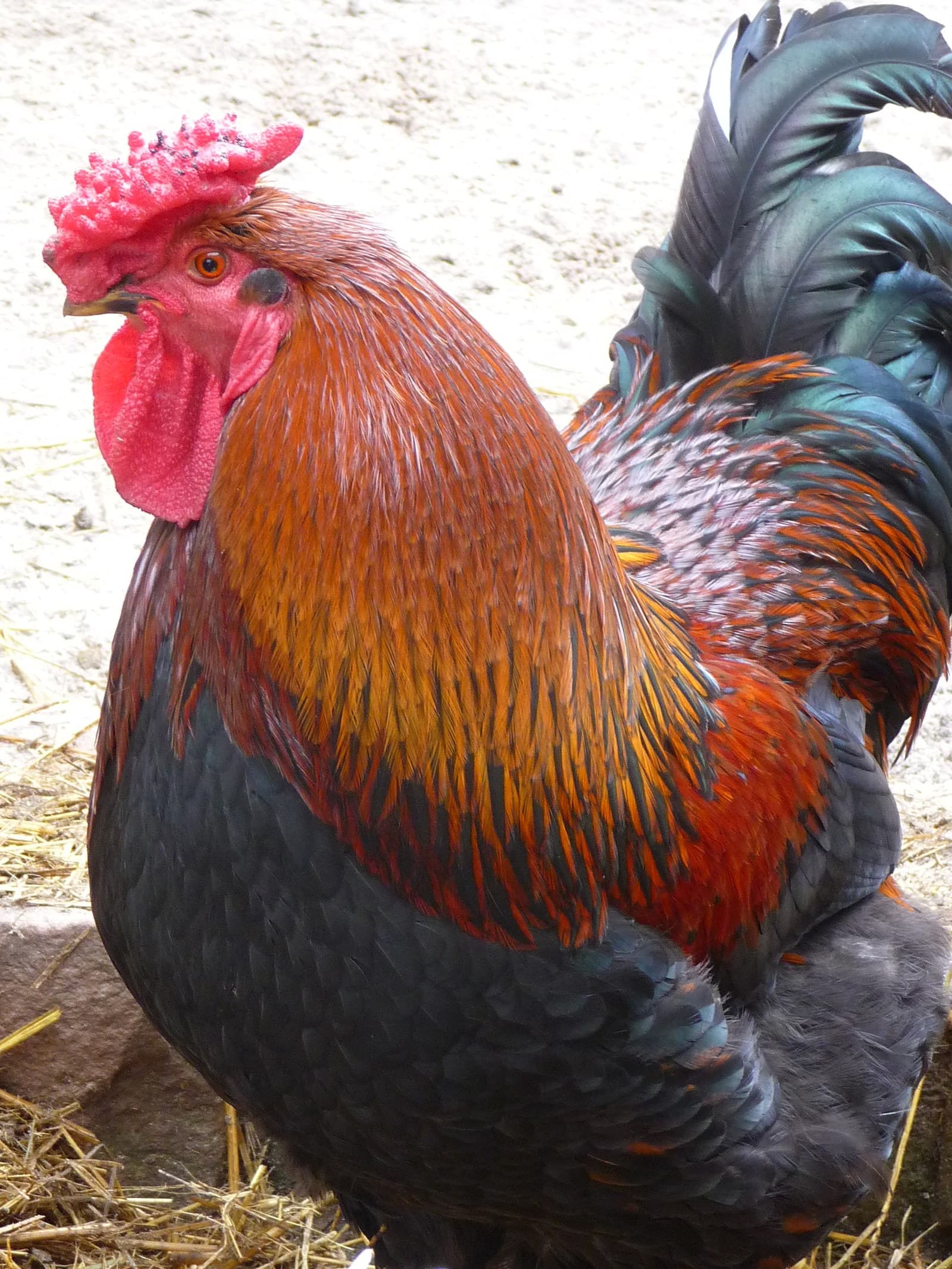
The Derbyshire Redcap is a hardy English dual-purpose bird named for its huge rose comb.
The Derbyshire Redcap is a pure-bred chicken breed in the PCGB Soft Feather Light class. Its origin is given as Derbyshire, England. It appears on the RBST Watchlist as a priority breed, so keepers of pure stock help conserve it.
It is kept in large and bantam forms. Recognised colours: Derbyshire Redcap (gold-spangled black).
Expect roughly 150–200 eggs a year, with white shells.
Compiled from poultryclub.org, rbst.org.uk, en.wikipedia.org. See sources
Photos
From keepers' flocks
No keeper photos yet.
Keep this breed? Add your birds on Flockstock and share a photo from the bird's page. Go to my flock
Identity
- Species
- Chicken
- Type
- Pure breed
- PCGB class
- Soft Feather Light
- Origin
- Derbyshire, England
History
It came from Derbyshire. Its makeup is unknown, but it probably involved Golden Spangled Hamburgh, Dorking, Old English Pheasant Fowl and Black-Red Game.
Appearance
The rose comb is over 7 cm long, covered in points, with a backward spike called a leader. Red earlobes set it apart from the Hamburgh. It comes in one plumage: dark reds, browns and black, with black tails and black crescents on the feathers. Wikipedia gives cocks about 3.4 kg and hens 2.75 kg.
Recognised colours
Derbyshire Redcap (gold-spangled black)
Size and weight
- Forms
- Large, Bantam
Eggs
- Eggs a year
- 150–200
- Egg colour
- White
- Notes
- A good number of large white eggs. The number depends on the strain.
Temperament
- In short
- Active
- Keeping notes
- Hardy and active; does well free-range.
Hardiness
Hardy
Broodiness
Rarely broody
Flying
Not recorded yet.
Suitability
- Good to know
- Hens don't usually go broody. It is on the RBST watchlist.
Conservation status (RBST)
A priority breed on the Rare Breeds Survival Trust Watchlist.
Breed club
- The Derbyshire Redcap Club, breed-specific · Website
Sources
This page is compiled from:
Review
Nothing is flagged on this page at the moment. Breeds and strains vary, so check with a breeder or club too.
Suggest a change
Spotted something wrong or missing? Tell us what it should say, and we'll review it.