Groninger chicken
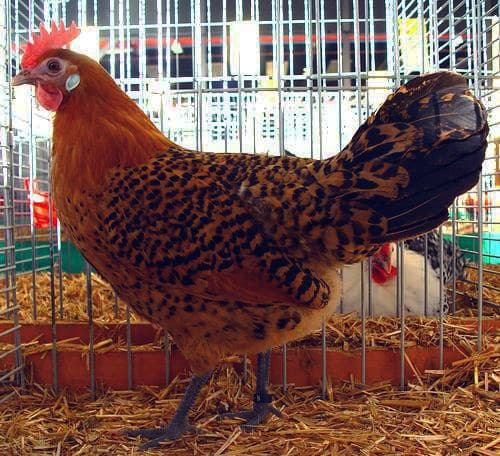
The Groninger Meeuw is a rare, pencilled Dutch landrace from the province of Groningen. It is a lively, hardy, early-laying free-ranger.
Some details are still being checked. Anything marked unconfirmed or reported may change. Suggest a change
The Groninger is a pure-bred chicken breed in the PCGB Rare Soft Feather Light class. Its origin is thought to be Groningen, Netherlands, which we are still checking.
It is kept in large form. Recognised colours: Silver-spangled, Gold-spangled, Black.
It lays white eggs.
Compiled from poultryclub.org, groningermeeuwenclub.nl, nl.wikipedia.org. See sources
Photos
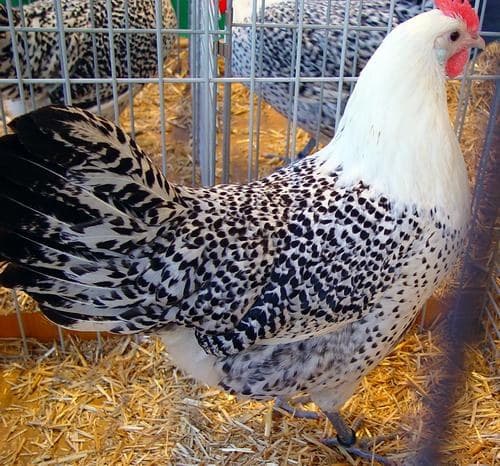
Silver pencilled. Photo: Eadepoeltegroen, CC BY-SA 3.0

From keepers' flocks
No keeper photos yet.
Keep this breed? Add your birds on Flockstock and share a photo from the bird's page. Go to my flock
Identity
- Species
- Chicken
- Type
- Pure breed
- PCGB class
- Rare Soft Feather Light
- Origin
- Groningen, Netherlands (unconfirmed)
History
It is thought to have arisen in the late 1700s from heavier Friesian-type fowl and the German Ostfriesische Möwe. R. Houwink first described it in 1888 at Groningen market. Locally called 'Maifies', it had almost been replaced by Leghorns. B.M.Th. Brouwers bred larger birds from 1903 and gave them the name. Official Dutch recognition came in 1919. Gold was developed in the late 1950s, bantams were recognised in 1968, and lemon in 1995 (bantam) and 2008 (large). In 1978 only about 30 birds were left.
Appearance
Silver, gold and lemon pencilled. Brown eyes, a comb that falls slightly at the end, and a wing band on the cock.
Recognised colours
Silver-spangled, Gold-spangled, Black
Size and weight
- Forms
- Large
Eggs
- Egg colour
- White
- Notes
- Hens start laying white eggs at about five months, with larger eggs in the second year.
Temperament
- Keeping notes
- Lively, hardy and a good forager.
Hardiness
Hardy; copes with bad weather
Broodiness
Seldom broody
Flying
Not recorded yet.
Suitability
- Good to know
- Hens seldom sit, but make excellent mothers when they do.
Conservation status (RBST)
Not on the Rare Breeds Survival Trust's priority list.
Breed club
- The Rare Poultry Society, umbrella · Website
Sources
This page is compiled from:
Review
Some details are still being checked. In particular: origin.
Suggest a change
Spotted something wrong or missing? Tell us what it should say, and we'll review it.