Norfolk Grey chicken
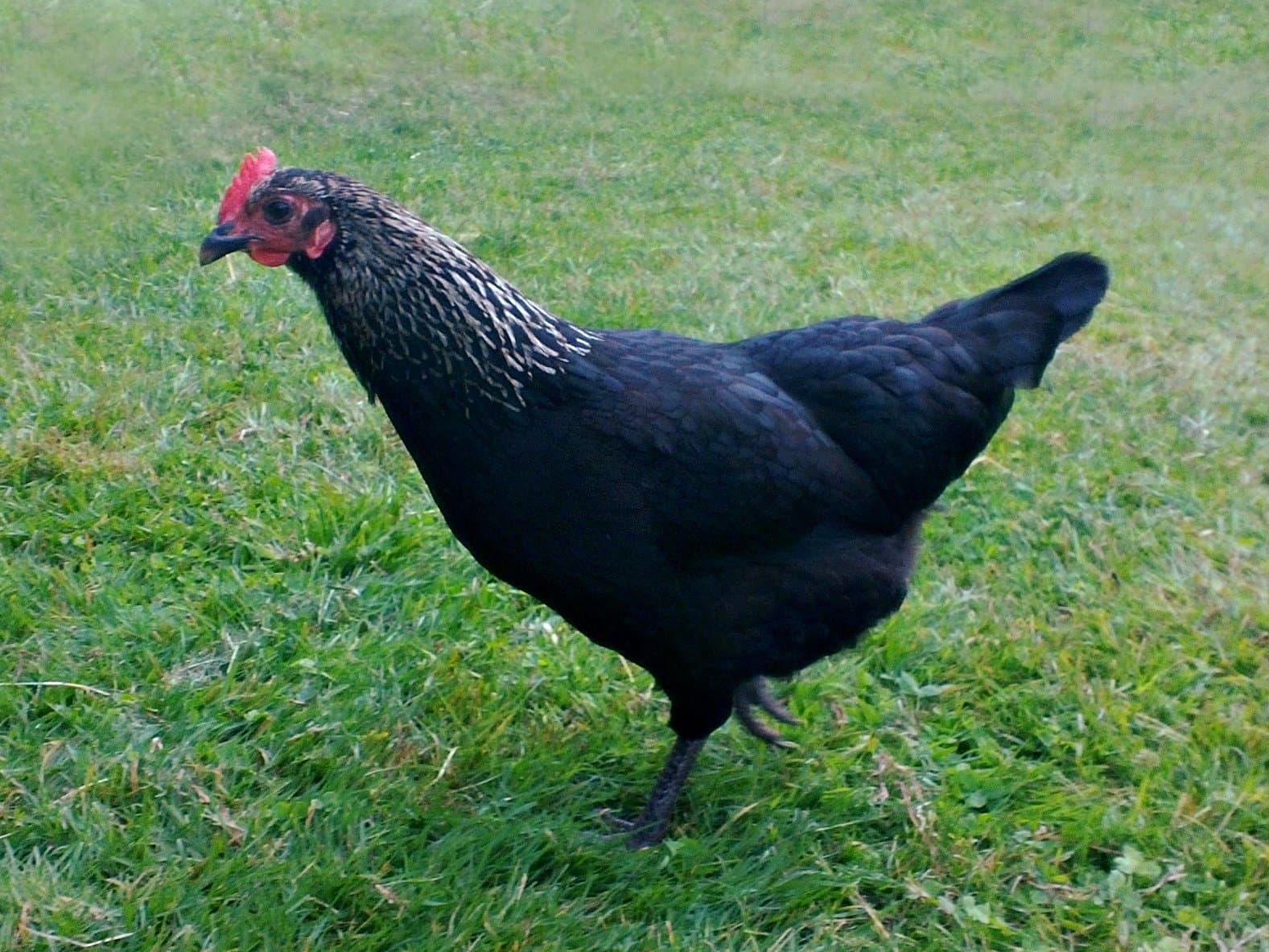
The Norfolk Grey is a rare British utility breed from near Norwich. It was first shown as the 'Black Maria'.
The Norfolk Grey is a pure-bred chicken breed in the PCGB Rare Soft Feather Heavy class. Its origin is given as Norfolk, England. It appears on the RBST Watchlist as a priority breed, so keepers of pure stock help conserve it.
It is kept in large and bantam forms. Recognised colours: Black with Silver White hackles. Typical adult weights: cock about 3.2–3.6 kg, hen about 2.25–2.7 kg, bantam cock about 900 g and bantam hen about 680 g.
Expect roughly 150–220 eggs a year, with tinted shells. It is mainly kept as a dual-purpose bird.
Compiled from poultryclub.org, rbst.org.uk, poultrykeeper.com, en.wikipedia.org. See sources
Photos
From keepers' flocks
No keeper photos yet.
Keep this breed? Add your birds on Flockstock and share a photo from the bird's page. Go to my flock
Identity
- Species
- Chicken
- Type
- Pure breed
- PCGB class
- Rare Soft Feather Heavy
- Origin
- Norfolk, England
- Kept for
- Dual purpose
History
Frederick W. Myhill of Hethel bred it before 1914, perhaps from 1908. His flock interbred while he was away in the First World War, so he had to recreate it. It was shown at the 1920 Dairy Show as the Black Maria and renamed Norfolk Grey in 1925. Its makeup is uncertain: poultrykeeper suggests Silver Birchen Game crossed with Duckwing Leghorn, while Myhill himself mentioned Dorking and Wyandotte. It was feared extinct by the 1960s until Rev. Andrew Bowden found a trio near Banbury in 1974. Roland Axman later helped rebuild numbers.
Appearance
Silver-grey hackles on black plumage.
Recognised colours
Black with Silver White hackles
Size and weight
- Forms
- Large, Bantam
- Cock
- 3.2–3.6 kg
- Hen
- 2.25–2.7 kg
- Bantam cock
- 900 g
- Bantam hen
- 680 g
Eggs
- Eggs a year
- 150–220
- Egg colour
- Tinted
Temperament
Not recorded yet.
Hardiness
Not recorded yet.
Broodiness
Not recorded yet.
Flying
Not recorded yet.
Suitability
- Beginners
- Suitable for beginners
- Good to know
- On RBST's at-risk list.
Conservation status (RBST)
A priority breed on the Rare Breeds Survival Trust Watchlist.
Breed club
- The Rare Poultry Society, umbrella · Website
Sources
This page is compiled from:
Review
Nothing is flagged on this page at the moment. Breeds and strains vary, so check with a breeder or club too.
Suggest a change
Spotted something wrong or missing? Tell us what it should say, and we'll review it.