Welsh Harlequin duck
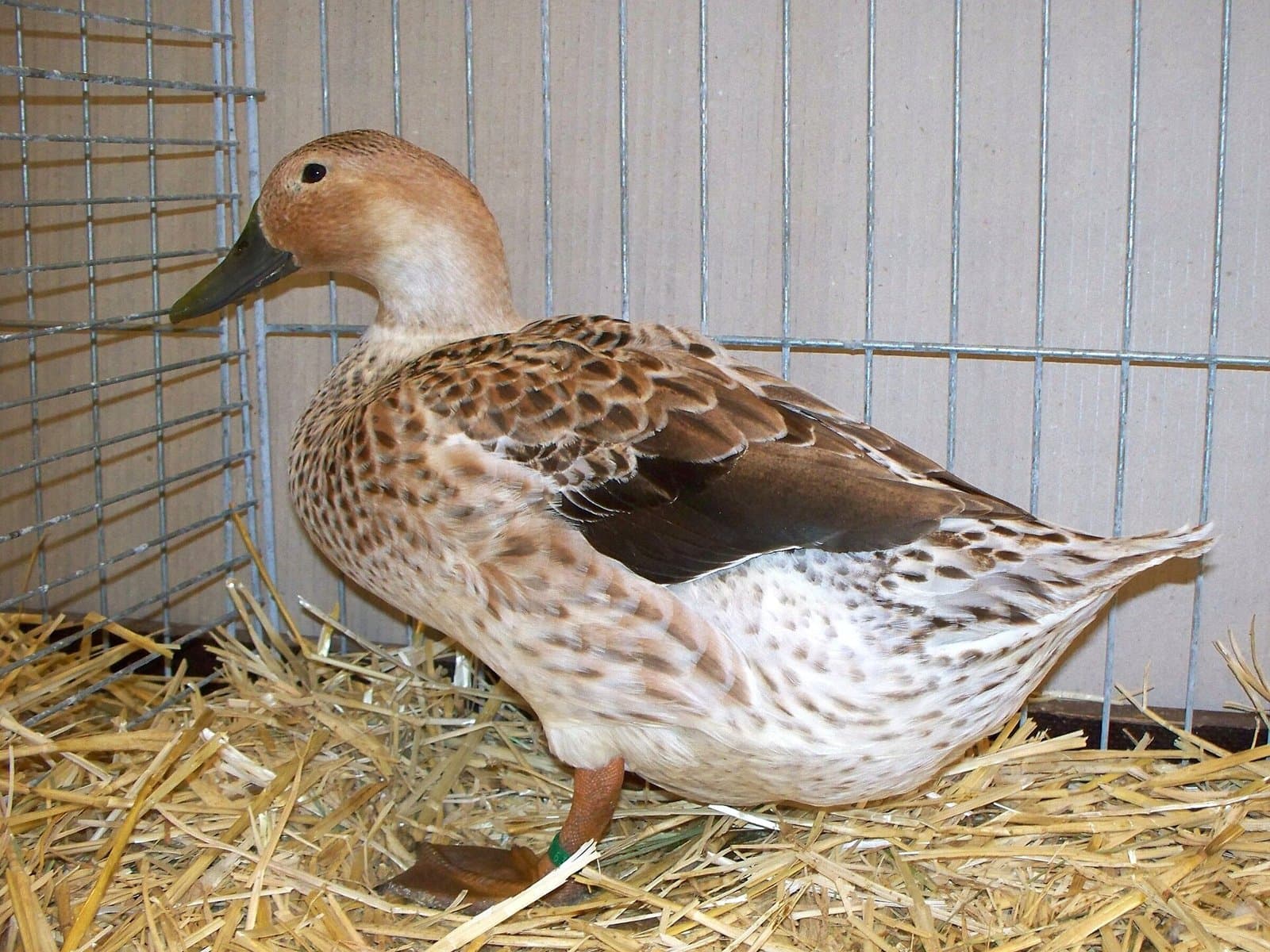
The Welsh Harlequin is a pale, harlequin-patterned laying duck. It came from a colour mutation in Khaki Campbells and is an excellent layer and active forager. It is on the RBST watchlist.
Some details are still being checked. Anything marked unconfirmed or reported may change. Suggest a change
The Welsh Harlequin is a pure-bred duck breed in the PCGB Light class. Its origin is given as Hertfordshire / Criccieth, Wales. It appears on the RBST Watchlist as a priority breed, so keepers of pure stock help conserve it.
It is kept in light form. Recognised colours: Silver, Gold. Reported adult weights: drake about 2.3–2.5 kg and duck about 2–2.3 kg.
Reported figures are 150–250 eggs a year, with white shells. It is mainly kept for eggs.
Compiled from poultryclub.org, rbst.org.uk, domestic-waterfowl.co.uk, poultrykeeper.com, waterfowl.org.uk, en.wikipedia.org. See sources
Photos
From keepers' flocks
No keeper photos yet.
Keep this breed? Add your birds on Flockstock and share a photo from the bird's page. Go to my flock
Identity
- Species
- Duck
- Type
- Pure breed
- PCGB class
- Light
- Origin
- Hertfordshire / Criccieth, Wales
- Kept for
- Eggs
History
In 1949, Group Captain Leslie Bonnet found two honey-coloured sports among his Khaki Campbells in Hertfordshire and called them Honey Campbells. He renamed them after moving to Criccieth, north Wales. In 1968 a fox killed most of his flock. Eddie Grayson of Lancashire, who had Bonnet's strain, revived the breed by crossing back to Khaki Campbells.
Appearance
Harlequin phase with dusky and brown dilution genes. Drakes are colourful and ducks are creamy with fawn markings.
Recognised colours
Silver, Gold
Size and weight
- Forms
- Light
- Drake
- 2.3–2.5 kg
- Duck
- 2–2.3 kg
These weights are reported and not yet verified.
Eggs
- Eggs a year
- 150–250 (reported, not yet verified)
- Egg colour
- White
- Notes
- An excellent layer. Bonnet claimed flocks averaged over 300 eggs per duck, but that is his figure, not a trial result.
Temperament
- In short
- Active forager
- Keeping notes
- An active forager.
Hardiness
Not recorded yet.
Broodiness
Not recorded yet.
Flying
Not recorded yet.
Suitability
- Good to know
- Unrelated to the wild Harlequin Duck.
Conservation status (RBST)
A priority breed on the Rare Breeds Survival Trust Watchlist.
Breed club
Sources
This page is compiled from:
Review
Some details are still being checked.
Suggest a change
Spotted something wrong or missing? Tell us what it should say, and we'll review it.