American Buff goose
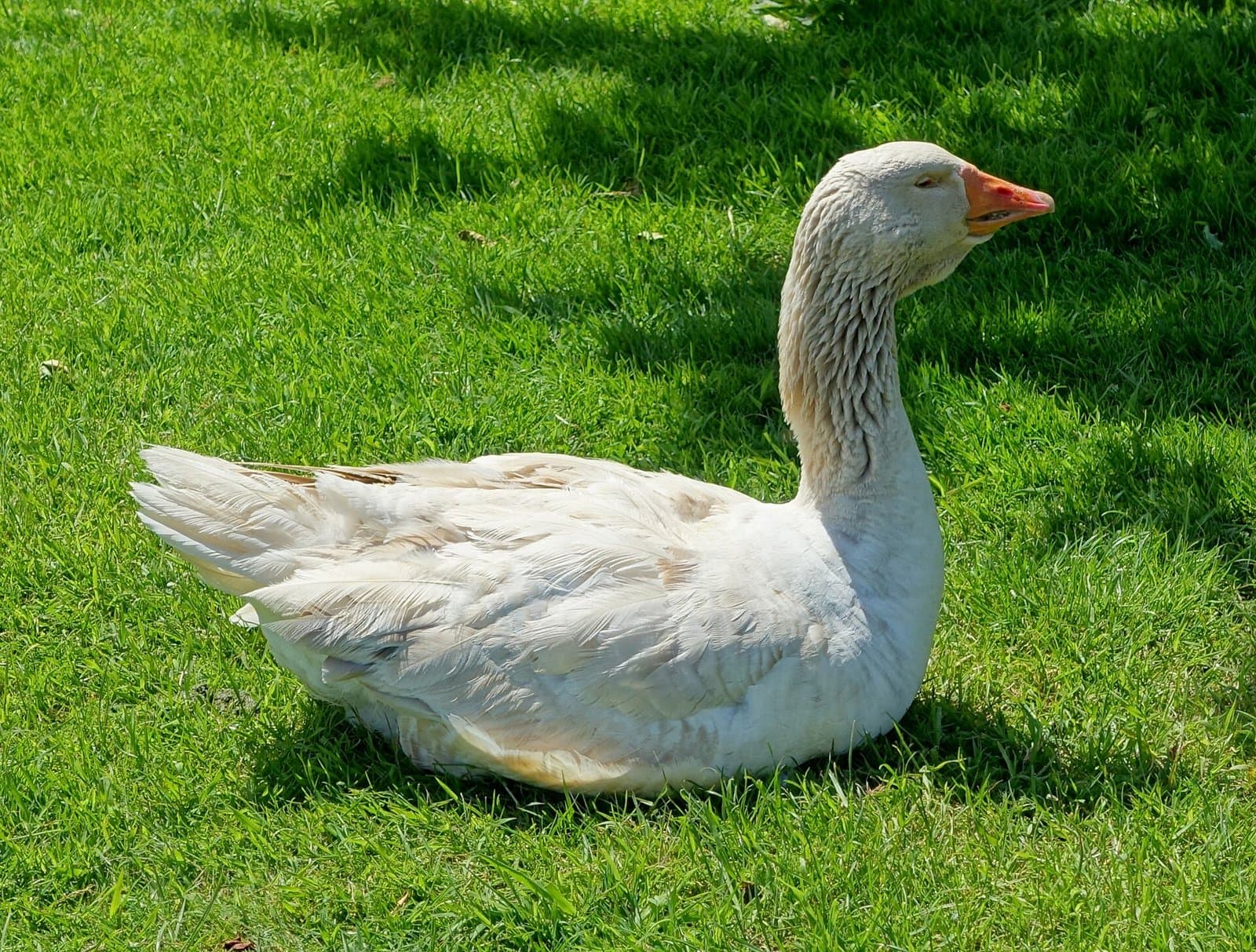
The American Buff is an apricot-fawn goose. It is one of the few goose breeds developed in America and is kept mainly for meat.
The American Buff is a pure-bred goose breed in the PCGB Heavy class. Its origin is given as USA (Pomeranian ancestry suggested).
It is kept in heavy form. Recognised colours: Buff. Typical adult weights: gander about 10–12.6 kg and goose about 9–12 kg.
Expect roughly 15–25 eggs a year, with white shells. It is mainly kept for the table.
Compiled from poultryclub.org, domestic-waterfowl.co.uk, poultrykeeper.com, waterfowl.org.uk, en.wikipedia.org. See sources
Photos
From keepers' flocks
No keeper photos yet.
Keep this breed? Add your birds on Flockstock and share a photo from the bird's page. Go to my flock
Identity
- Species
- Goose
- Type
- Pure breed
- PCGB class
- Heavy
- Origin
- USA (Pomeranian ancestry suggested)
- Kept for
- Table
History
Its origins are unclear. It descends from the Greylag, and BWA links it to the buff geese of Pomerania. Missouri breeder Oscar Grow developed the modern breed in the 1930s–40s, and it was standardised in the USA in 1947. It reached the UK in the 1970s and was standardised there in 1982. Ruth Books later created a Tufted American Buff by crossing it with the Tufted Roman.
Appearance
Buff with Greylag-type markings, like a buff Toulouse in pattern, and a dual-lobed paunch. Its orange bill and legs set it apart from the near-identical Brecon Buff, which is pink. The colour fades in sunlight and looks best just after the moult.
Recognised colours
Buff
Size and weight
- Forms
- Heavy
- Gander
- 10–12.6 kg
- Goose
- 9–12 kg
Eggs
- Eggs a year
- 15–25
- Egg colour
- White
- Notes
- No reliable egg figure was found in the sources.
Temperament
- Keeping notes
- A utility table goose.
Hardiness
Not recorded yet.
Broodiness
Not recorded yet.
Flying
Not recorded yet.
Suitability
- Good to know
- If you're buying, check the bill and leg colour to tell it from the Brecon Buff.
Conservation status (RBST)
Not on the Rare Breeds Survival Trust's priority list.
Breed club
- The Goose Club, umbrella · Website
Sources
This page is compiled from:
Review
Nothing is flagged on this page at the moment. Breeds and strains vary, so check with a breeder or club too.
Suggest a change
Spotted something wrong or missing? Tell us what it should say, and we'll review it.