Helmeted guinea fowl
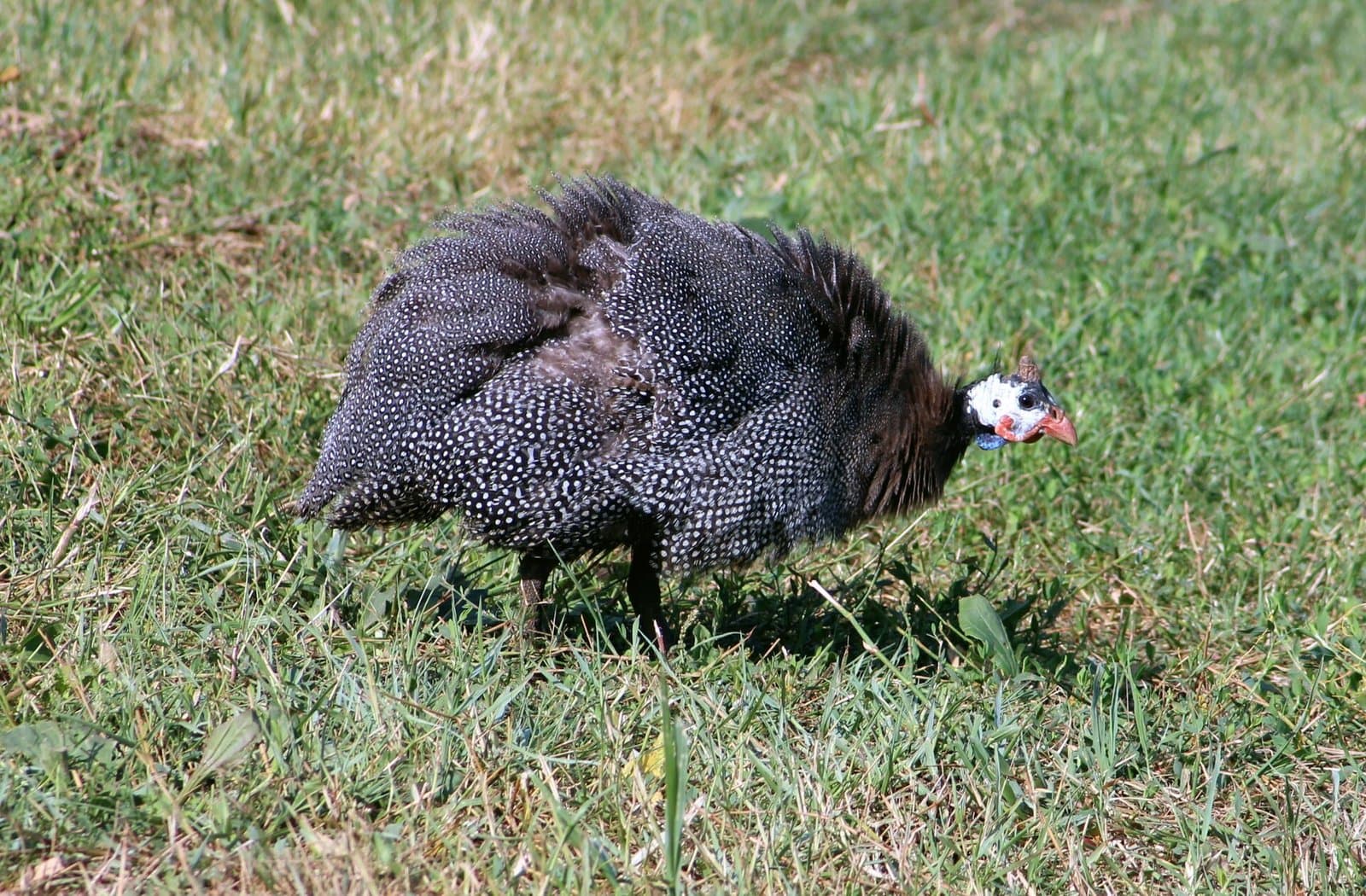
The helmeted guinea fowl is the domesticated guinea fowl: an African game bird kept for pest control, as an alarm, and for meat and eggs.
Some details are still being checked. Anything marked unconfirmed or reported may change. Suggest a change
The Helmeted guinea fowl is a pure-bred guinea fowl breed. Its origin is thought to be Africa (wild range), which we are still checking.
It is kept in standard form. Recognised colours: Pearl (Pearl Grey), Lavender, White, Royal Purple, Coral Blue, Buff, Chocolate, Pied.
Expect roughly 90–110 eggs a year, with cream/light brown, speckled shells.
Compiled from en.wikipedia.org, poultry.extension.org. See sources
Photos
From keepers' flocks
No keeper photos yet.
Keep this breed? Add your birds on Flockstock and share a photo from the bird's page. Go to my flock
Identity
- Species
- Guinea fowl
- Type
- Pure breed
- Origin
- Africa (wild range) (unconfirmed)
History
It is native to Africa, mainly south of the Sahara, and has been introduced as a domestic bird to Europe, the Americas and Australia. Linnaeus described it in 1758, first as Phasianus meleagris, then moved it to Numida in 1764. Early European settlers in North America confused it with the wild turkey.
Appearance
Bony 'helmet' on the head, with no spurs.
Recognised colours
Pearl (Pearl Grey), Lavender, White, Royal Purple, Coral Blue, Buff, Chocolate, Pied
Size and weight
- Forms
- Standard
Eggs
- Eggs a year
- 90–110
- Egg colour
- Cream/light brown, speckled
- Notes
- Clutches are normally 6–12 eggs, incubated for 26–28 days. Domestic birds lay very thick-shelled eggs. Hens lay in a season from spring to early autumn. A carefully managed flock may lay 100 or more, and backyard birds often lay fewer when they go broody.
Temperament
- Keeping notes
- Scratches like a chicken but seldom uproots plants. In the breeding season over 80% of its diet can be invertebrates such as beetles. Males often fight each other.
Hardiness
Not recorded yet.
Broodiness
Poor mothers; often abandon nests
Flying
Keets fly within about a week
Suitability
- Good to know
- Domestic hens are poor mothers and often abandon nests. Keets can flutter onto low branches about a week after hatching. They can live up to 12 years in the wild.
Conservation status (RBST)
Not on the Rare Breeds Survival Trust's priority list.
Breed club
Not recorded yet.
Sources
This page is compiled from:
Review
Some details are still being checked. In particular: origin.
Suggest a change
Spotted something wrong or missing? Tell us what it should say, and we'll review it.