Bronze turkey
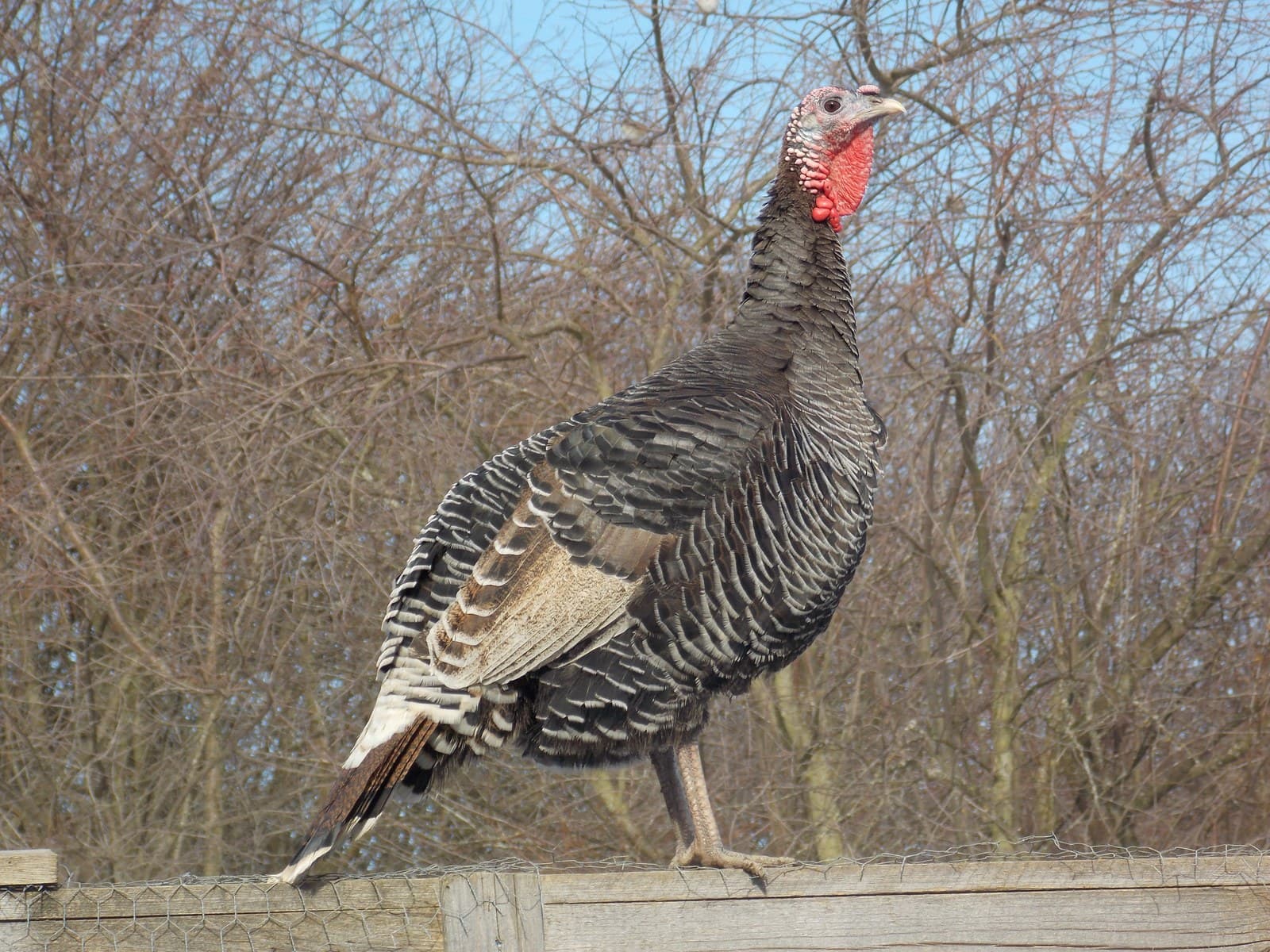
The Bronze is the classic heavy turkey. Its colouring is the closest to the Eastern Wild turkey, and it is the most popular show variety.
The Bronze is a pure-bred turkey breed in the PCGB Heavy class. Its origin is given as Europe (from American stock). It appears on the RBST Watchlist as a priority breed, so keepers of pure stock help conserve it.
It is kept in heavy form. Recognised colours: Bronze.
Expect roughly 50–100 eggs a year, with cream, speckled shells.
Compiled from poultryclub.org, rbst.org.uk, turkeyclub.org.uk, en.wikipedia.org, livestockconservancy.org. See sources
Photos
From keepers' flocks
No keeper photos yet.
Keep this breed? Add your birds on Flockstock and share a photo from the bird's page. Go to my flock
Identity
- Species
- Turkey
- Type
- Pure breed
- PCGB class
- Heavy
- Origin
- Europe (from American stock)
History
Turkey Club UK says the Bronze was developed further in England and then taken back to the Americas, where it became very popular. Today, standard (heritage) Bronzes are far outnumbered by commercial Broad-breasted Bronzes.
Appearance
Metallic bronze throughout, with a coppery neck and back. The tail is black, barred brown, with a bronze band and a white edge. It has a red head that can change to bluish-white, and hazel eyes. Turkey Club UK standard weights: mature stag 13.6–18.1 kg, mature hen 8.2–11.8 kg.
Recognised colours
Bronze
Size and weight
- Forms
- Heavy
Eggs
- Eggs a year
- 50–100
- Egg colour
- Cream, speckled
- Notes
- About 75 is typical.
Temperament
- Keeping notes
- A heavy table and exhibition bird.
Hardiness
Not recorded yet.
Broodiness
Not recorded yet.
Flying
Not recorded yet.
Suitability
- Good to know
- Buy standard-bred stock if you want a heritage Bronze, not a broad-breasted commercial line.
Conservation status (RBST)
A priority breed on the Rare Breeds Survival Trust Watchlist.
Breed club
- Turkey Club UK, umbrella · Website
Sources
This page is compiled from:
Review
Nothing is flagged on this page at the moment. Breeds and strains vary, so check with a breeder or club too.
Suggest a change
Spotted something wrong or missing? Tell us what it should say, and we'll review it.