Crèvecoeur chicken
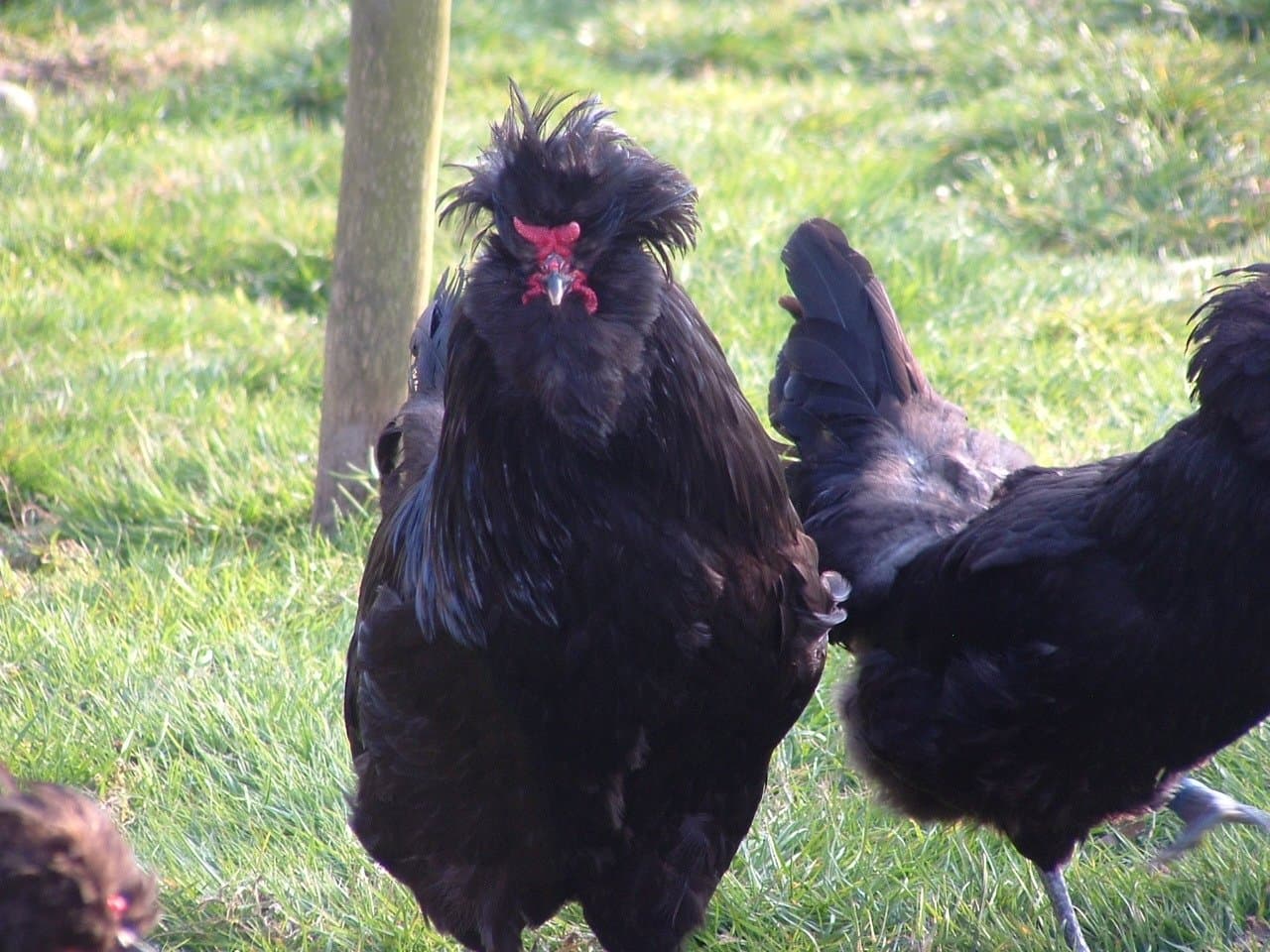
The Crèvecoeur is a crested, bearded, black French breed — one of the oldest French breeds and now very rare.
Some details are still being checked. Anything marked unconfirmed or reported may change. Suggest a change
The Crèvecoeur is a pure-bred chicken breed in the PCGB Rare Soft Feather Heavy class. Its origin is given as France.
It is kept in large and bantam forms. Recognised colours: Black, Blue, White, Cuckoo.
Expect roughly 120–150 eggs a year, with white shells.
Compiled from poultryclub.org, en.wikipedia.org. See sources
Photos
From keepers' flocks
No keeper photos yet.
Keep this breed? Add your birds on Flockstock and share a photo from the bird's page. Go to my flock
Identity
- Species
- Chicken
- Type
- Pure breed
- PCGB class
- Rare Soft Feather Heavy
- Origin
- France
History
It is named after the village of Crèvecoeur-en-Auge in Normandy, where it was valued as a table bird by the 1800s. Numbers collapsed in the 20th century.
Appearance
Medium-heavy, all-black with a green sheen, a full crest, beard and muffs, and a V-shaped (horned) comb.
Recognised colours
Black, Blue, White, Cuckoo
Size and weight
- Forms
- Large, Bantam
Eggs
- Eggs a year
- 120–150
- Egg colour
- White
- Notes
- Livestock Conservancy: 120–150 white to tinted eggs a year.
Temperament
- In short
- Calm but easily startled (crest limits vision)
- Keeping notes
- Generally calm; the crest restricts vision, so they can be nervous if approached suddenly.
Hardiness
Not recorded yet.
Broodiness
Rarely broody (unconfirmed)
Flying
Not recorded yet.
Suitability
- Beginners
- Not ideal for beginners (unconfirmed)
- Good to know
- Keep the crest dry and check for mites; covered drinkers help.
Conservation status (RBST)
Not on the Rare Breeds Survival Trust's priority list.
Breed club
- The Rare Poultry Society, umbrella · Website
Sources
This page is compiled from:
Review
Some details are still being checked. In particular: broodiness; beginner suitability.
Suggest a change
Spotted something wrong or missing? Tell us what it should say, and we'll review it.