Dutch chicken
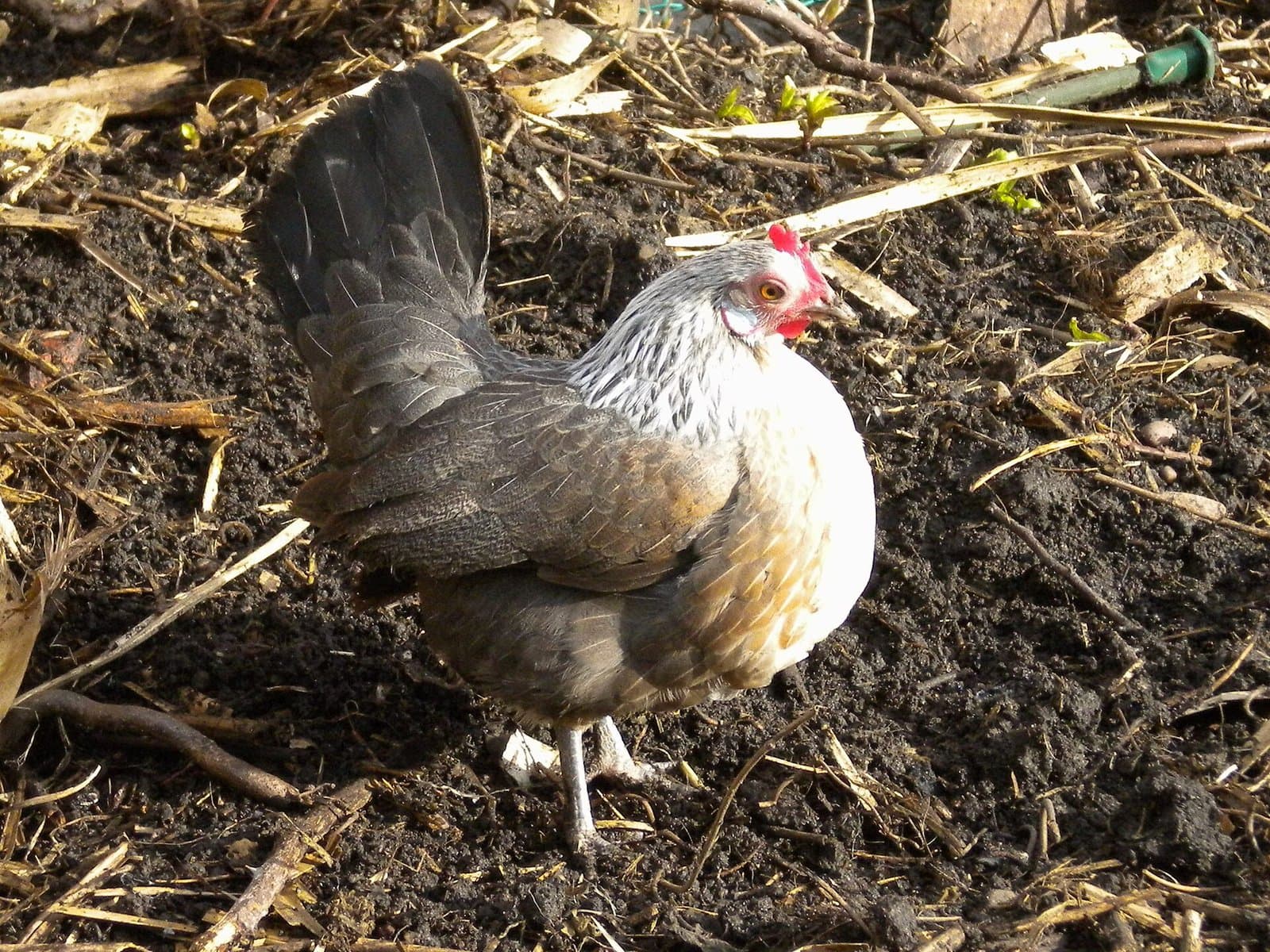
The Dutch Bantam is a tiny true bantam from Holland, kept mainly for showing, in many partridge-based colours.
The Dutch is a pure-bred chicken breed in the PCGB True Bantam class. Its origin is given as Netherlands.
It is kept in bantam form. Recognised colours: Gold Partridge, Silver Partridge, Yellow Partridge, Blue Silver Partridge, Blue Yellow Partridge, Blue Partridge, Red Shouldered White (Pile), Cuckoo Partridge (Crele), Cuckoo, Black, White, Blue, Lavender. Typical adult weights: bantam cock about 500–550 g and bantam hen about 400–450 g.
Expect roughly 80–160 eggs a year, with white/cream shells. It is mainly kept for exhibition or as an ornamental bird.
Compiled from poultryclub.org, poultrykeeper.com, en.wikipedia.org. See sources
Photos
From keepers' flocks
No keeper photos yet.
Keep this breed? Add your birds on Flockstock and share a photo from the bird's page. Go to my flock
Identity
- Species
- Chicken
- Type
- Pure breed
- PCGB class
- True Bantam
- Origin
- Netherlands
- Kept for
- Exhibition or ornamental
History
Its ancestors are thought to be bantams carried by sailors from the Dutch East Indies. It was developed in Holland in the 1880s. Birds reached the UK around 1945 but died out, were reimported in the 1970s, and the Dutch Bantam Club formed in 1982.
Appearance
Many colours, including Gold, Silver and Yellow Partridge, Blues, Pile, Crele and Cuckoo. Cocks weigh 500–550 g.
Recognised colours
Gold Partridge, Silver Partridge, Yellow Partridge, Blue Silver Partridge, Blue Yellow Partridge, Blue Partridge, Red Shouldered White (Pile), Cuckoo Partridge (Crele), Cuckoo, Black, White, Blue, Lavender
Size and weight
- Forms
- Bantam
- Bantam cock
- 500–550 g
- Bantam hen
- 400–450 g
Eggs
- Eggs a year
- 80–160
- Egg colour
- White/cream
- Notes
- Good for its size: 80–160 small tinted eggs.
Temperament
Not recorded yet.
Hardiness
Not recorded yet.
Broodiness
Not recorded yet.
Flying
Not recorded yet.
Suitability
Not recorded yet.
Conservation status (RBST)
Not on the Rare Breeds Survival Trust's priority list.
Breed club
- The Dutch Bantam Club, breed-specific · Website
Sources
This page is compiled from:
Review
Nothing is flagged on this page at the moment. Breeds and strains vary, so check with a breeder or club too.
Suggest a change
Spotted something wrong or missing? Tell us what it should say, and we'll review it.