Indian Game chicken
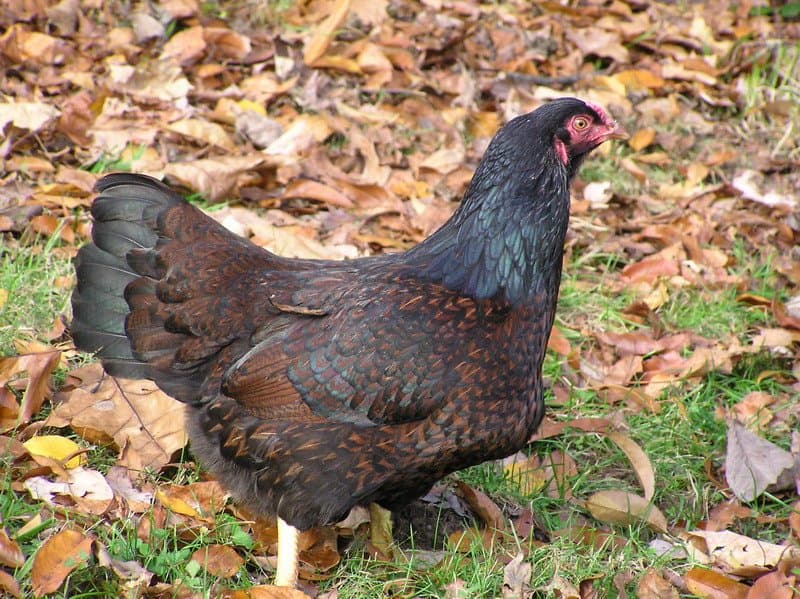
Indian Game (Cornish in the USA) is a squat, enormously broad-breasted table breed whose genes underpin much of the modern meat-chicken industry.
Some details are still being checked. Anything marked unconfirmed or reported may change. Suggest a change
The Indian Game is a pure-bred chicken breed in the PCGB Hard Feather class. Its origin is given as Cornwall, England. It appears on the RBST Watchlist as a priority breed, so keepers of pure stock help conserve it.
It is kept in large and bantam forms. Recognised colours: Dark, Jubilee, Double Laced Blue. Typical adult weights: cock about 3.6 kg, hen about 2.7 kg, bantam cock about 2.0 kg and bantam hen about 1.5 kg.
Expect roughly 60–90 eggs a year, with light brown shells. It is mainly kept for the table.
Compiled from poultryclub.org, rbst.org.uk, poultrykeeper.com, indiangame.co.uk, en.wikipedia.org. See sources
Photos
From keepers' flocks
No keeper photos yet.
Keep this breed? Add your birds on Flockstock and share a photo from the bird's page. Go to my flock
Identity
- Species
- Chicken
- Type
- Pure breed
- PCGB class
- Hard Feather
- Origin
- Cornwall, England
- Kept for
- Table
History
Developed in Cornwall in the early 1800s by crossing Asil and other Asian game with Old English Game. It was standardised in Britain and later exported, becoming the 'Cornish' of America and a parent of commercial broiler lines.
Appearance
Very wide, short and muscular with thick yellow legs set well apart, a pea comb and hard, close plumage. UK colours are Dark (double-laced), Jubilee and Double-Laced Blue.
Recognised colours
Dark, Jubilee, Double Laced Blue
Size and weight
- Forms
- Large, Bantam
- Cock
- 3.6 kg
- Hen
- 2.7 kg
- Bantam cock
- 2.0 kg
- Bantam hen
- 1.5 kg
Eggs
- Eggs a year
- 60–90
- Egg colour
- Light brown
- Notes
- Poor layers: roughly 60–90 tinted eggs a year. Hens go broody, but their weight and hard feathering mean they cover few eggs.
Temperament
- In short
- Docile and steady
- Keeping notes
- Usually docile and easily handled despite the game look. Their short, heavy build makes natural mating difficult, so fertility can be low.
Hardiness
Hardy, but avoid cold wet conditions (unconfirmed)
Broodiness
Goes broody; covers few eggs
Flying
Non-flyer (too heavy)
Suitability
- Beginners
- Suitable for beginners wanting a table bird (unconfirmed)
- Good to know
- Needs exercise and plenty of greens (grass keeps leg colour rich) to avoid becoming overweight.
Conservation status (RBST)
A priority breed on the Rare Breeds Survival Trust Watchlist.
Breed club
- The Indian Game Club, breed-specific · Website
Sources
This page is compiled from:
Review
Some details are still being checked. In particular: hardiness in wet; beginner suitability.
Suggest a change
Spotted something wrong or missing? Tell us what it should say, and we'll review it.