Old English Game Bantam chicken
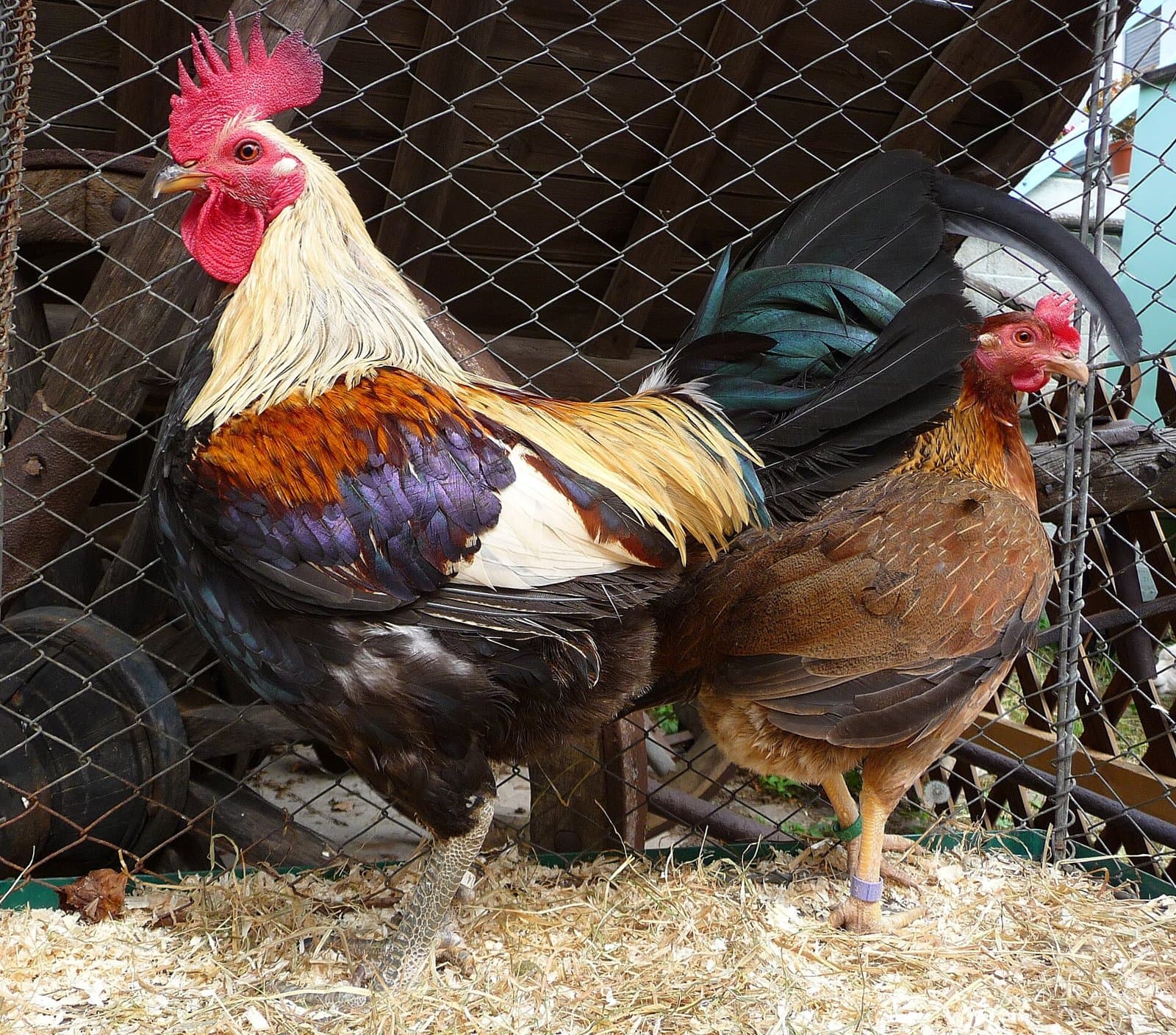
Old English Game Bantams are a true bantam, not a miniature of the large fowl, and one of the most widely exhibited bantams in Britain.
Some details are still being checked. Anything marked unconfirmed or reported may change. Suggest a change
The Old English Game Bantam is a pure-bred chicken breed in the PCGB Hard Feather class. Its origin is given as Great Britain. It appears on the RBST Watchlist as a priority breed, so keepers of pure stock help conserve it.
It is kept in bantam form. Recognised colours: Black-Red (partridge bred), Black-Red (Wheaten bred), Blue-Red, Blue-Tailed (Wheaten hen), Brown-Red, Crele, Cuckoo, Furness, Blue-Furness, Spangle, Silver Duckwing, Golden Duckwing, Blue Duckwing, Lemon Blue, Pile, Brassy-Backed Black, Brassy Backed Blue, Splashed, Ginger-Red, Blue-Grey, Self White, Self Black, Self Blue, Muffs, Tassels. Typical adult weights: bantam cock about 620–740 g and bantam hen about 510–620 g.
Expect roughly 100–160 eggs a year, with cream/tinted shells. It is mainly kept for exhibition or as an ornamental bird.
Compiled from poultryclub.org, rbst.org.uk, poultrykeeper.com. See sources
Photos
From keepers' flocks
No keeper photos yet.
Keep this breed? Add your birds on Flockstock and share a photo from the bird's page. Go to my flock
Identity
- Species
- Chicken
- Type
- Pure breed
- PCGB class
- Hard Feather
- Also known as
- Old English Game
- Origin
- Great Britain
- Kept for
- Exhibition or ornamental
History
Developed during the 20th century as a separate, much smaller and rounder bird than large Old English Game; they have their own club and standard.
Appearance
Short-backed, broad-breasted and compact, with tight glossy feathering. Many colours, including black-reds, blue-reds, brown-reds, crele, cuckoo, furness, spangle and duckwings.
Recognised colours
Black-Red (partridge bred), Black-Red (Wheaten bred), Blue-Red, Blue-Tailed (Wheaten hen), Brown-Red, Crele, Cuckoo, Furness, Blue-Furness, Spangle, Silver Duckwing, Golden Duckwing, Blue Duckwing, Lemon Blue, Pile, Brassy-Backed Black, Brassy Backed Blue, Splashed, Ginger-Red, Blue-Grey, Self White, Self Black, Self Blue, Muffs, Tassels
Size and weight
- Forms
- Bantam
- Bantam cock
- 620–740 g
- Bantam hen
- 510–620 g
Eggs
- Eggs a year
- 100–160
- Egg colour
- Cream/tinted
- Notes
- Lays roughly 100–160 small tinted eggs a year; hens are reliable sitters.
Temperament
- In short
- Lively; cocks combative with each other
- Keeping notes
- Lively and confident; cocks spar with each other but they are easy to tame.
Hardiness
Hardy
Broodiness
Frequently broody; good mother
Flying
Strong flyer
Suitability
- Beginners
- Suitable for beginners (unconfirmed)
- Good to know
- Robust birds that cope well on free range.
Conservation status (RBST)
A priority breed on the Rare Breeds Survival Trust Watchlist, listed as Old English Game.
Breed club
- The Old English Game Bantam Club, breed-specific
Sources
This page is compiled from:
Review
Some details are still being checked. In particular: beginner suitability.
Suggest a change
Spotted something wrong or missing? Tell us what it should say, and we'll review it.