Blue Swedish duck
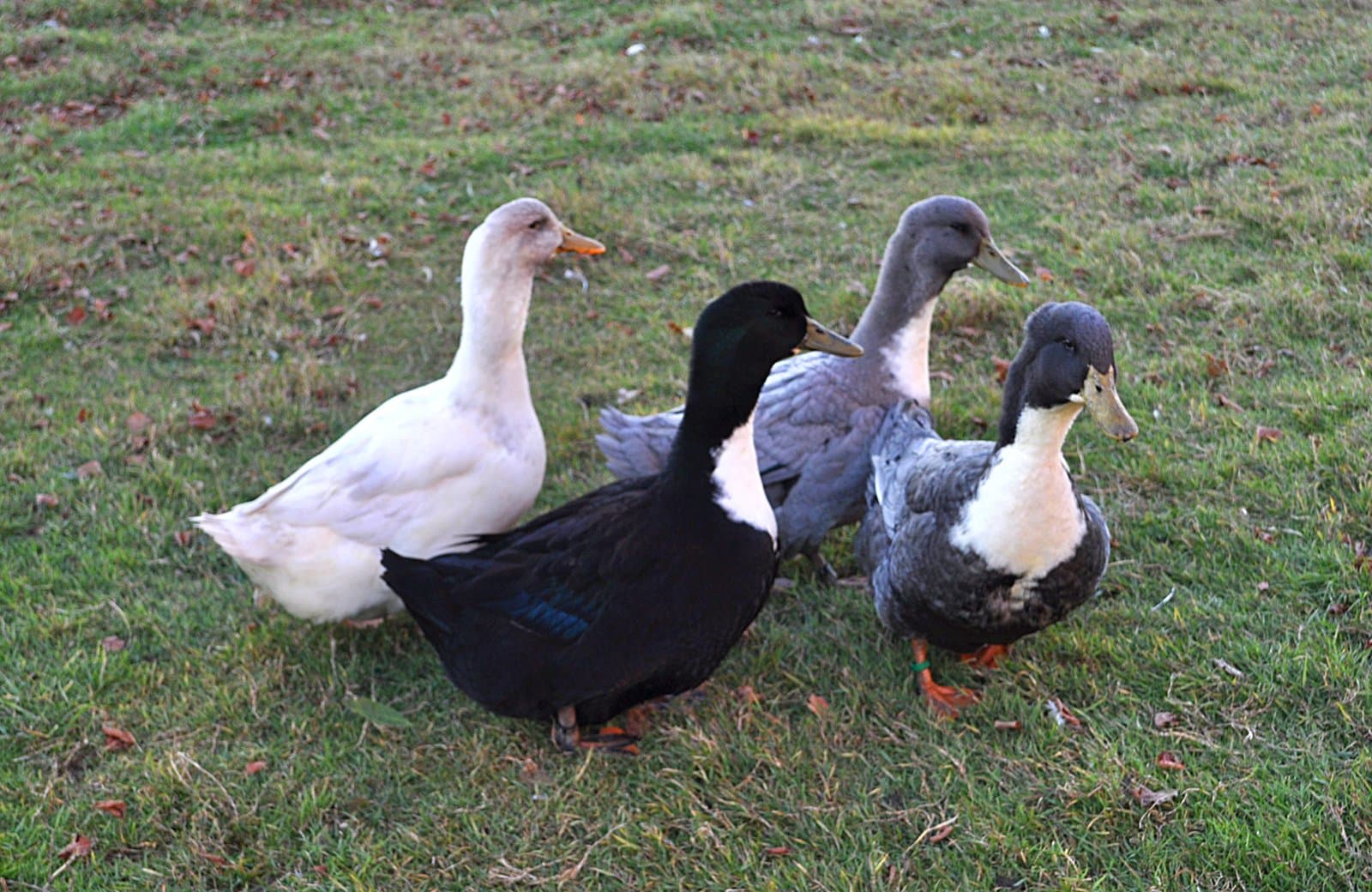
The Blue Swedish is a sturdy heavy duck from the Baltic. It is blue with a white bib and two white flight feathers, and is kept for meat and for showing.
The Blue Swedish is a pure-bred duck breed in the PCGB Heavy class. Its origin is given as Swedish Pomerania.
It is kept in heavy form. Recognised colours: Blue, Black also exists. Typical adult weights: drake about 3.6 kg and duck about 3.2 kg.
Expect roughly 80–150 eggs a year, with white/blue-green shells. It is mainly kept for the table and for exhibition or as an ornamental bird.
Compiled from poultryclub.org, domestic-waterfowl.co.uk, poultrykeeper.com, waterfowl.org.uk, en.wikipedia.org. See sources
Photos
From keepers' flocks
No keeper photos yet.
Keep this breed? Add your birds on Flockstock and share a photo from the bird's page. Go to my flock
Identity
- Species
- Duck
- Type
- Pure breed
- PCGB class
- Heavy
- Origin
- Swedish Pomerania
- Kept for
- Table, Exhibition or ornamental
History
It comes from Swedish Pomerania, now split between Germany and Poland, and is recorded there from 1835. Birds reached the USA in 1884. America standardised it in 1904 as a medium duck, but Britain admitted it only in 1982, as a heavy breed.
Appearance
A plump, rounded, full-breasted duck. Only blue is standardised in Britain. Because blue is a heterozygous colour, blue-to-blue matings produce blue, black and splash ducklings. Black crossed with splash gives all blue. Bills should be bluish, and yellow bills are a fault.
Recognised colours
Blue, Black also exists
Size and weight
- Forms
- Heavy
- Drake
- 3.6 kg
- Duck
- 3.2 kg
Eggs
- Eggs a year
- 80–150
- Egg colour
- White/blue-green
- Notes
- BWA gives about 150 eggs a year. Surplus birds fatten well.
Temperament
- Keeping notes
- Drakes are very active in the breeding season, so BWA suggests at least two or three ducks per drake.
Hardiness
Not recorded yet.
Broodiness
Not recorded yet.
Flying
Not recorded yet.
Suitability
- Good to know
- Wikipedia says the worldwide status was listed as critical in 2007.
Conservation status (RBST)
Not on the Rare Breeds Survival Trust's priority list.
Breed club
Sources
This page is compiled from:
Review
Nothing is flagged on this page at the moment. Breeds and strains vary, so check with a breeder or club too.
Suggest a change
Spotted something wrong or missing? Tell us what it should say, and we'll review it.