Chinese goose
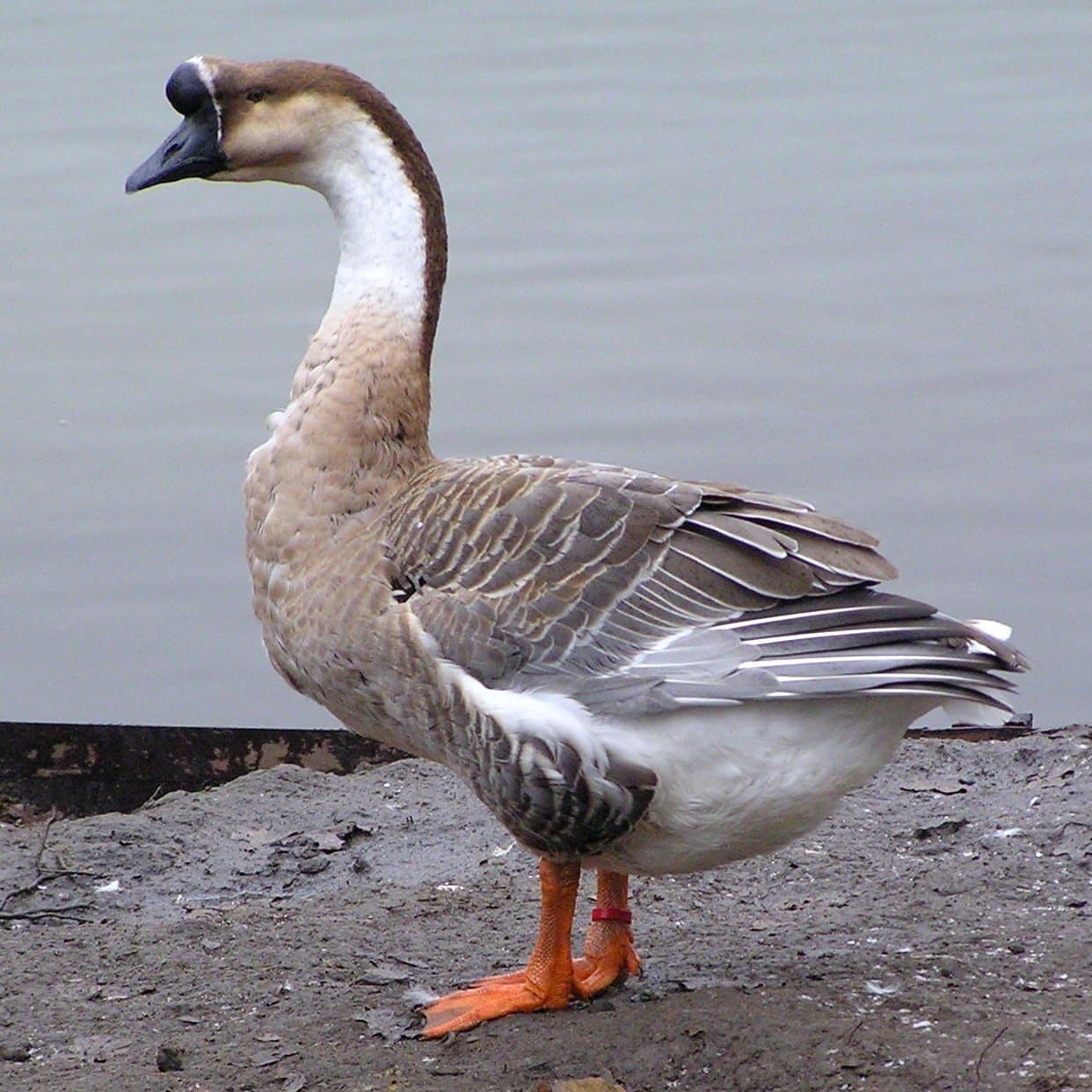
The Chinese is a light, graceful knob goose with a long swan-like neck. It lays more eggs than its heavier cousin, the African.
Some details are still being checked. Anything marked unconfirmed or reported may change. Suggest a change
The Chinese is a pure-bred goose breed in the PCGB Light class. Its origin is given as China.
It is kept in light form. Recognised colours: Brown-grey, White.
Expect roughly 50–80 eggs a year, with white shells.
Compiled from poultryclub.org, domestic-waterfowl.co.uk, poultrykeeper.com, waterfowl.org.uk, en.wikipedia.org. See sources
Photos
From keepers' flocks
No keeper photos yet.
Keep this breed? Add your birds on Flockstock and share a photo from the bird's page. Go to my flock
Identity
- Species
- Goose
- Type
- Pure breed
- PCGB class
- Light
- Origin
- China
History
It descends from the Swan Goose. China has more than twenty knob-goose breeds. It has been in Britain since at least the early 1700s. America standardised it in 1874 and Britain in 1954. (Poultrykeeper's suggestion of a European origin conflicts with BWA and Wikipedia.)
Appearance
Two UK show colours: Brown (also called grey or fawn), marked like the brown African, and White. The knob on the bill is much bigger in ganders. The UK has an elegant exhibition strain from America and a heavier English utility strain.
Recognised colours
Brown-grey, White
Size and weight
- Forms
- Light
Eggs
- Eggs a year
- 50–80
- Egg colour
- White
- Notes
- The best layer among geese of this type. The English utility strain is the better choice for eggs. About 50 is usual, and some geese reach 80 or more.
Temperament
- Keeping notes
- BWA says Chinese geese are fun to have around. They are known for being noisy and alert (unconfirmed).
Hardiness
Not recorded yet.
Broodiness
Not recorded yet.
Flying
Not recorded yet.
Suitability
- Good to know
- The purpose of the knob is unknown.
Conservation status (RBST)
Not on the Rare Breeds Survival Trust's priority list.
Breed club
- The Goose Club, umbrella · Website
Sources
This page is compiled from:
Review
Some details are still being checked. In particular: noise.
Suggest a change
Spotted something wrong or missing? Tell us what it should say, and we'll review it.