Sebastopol goose
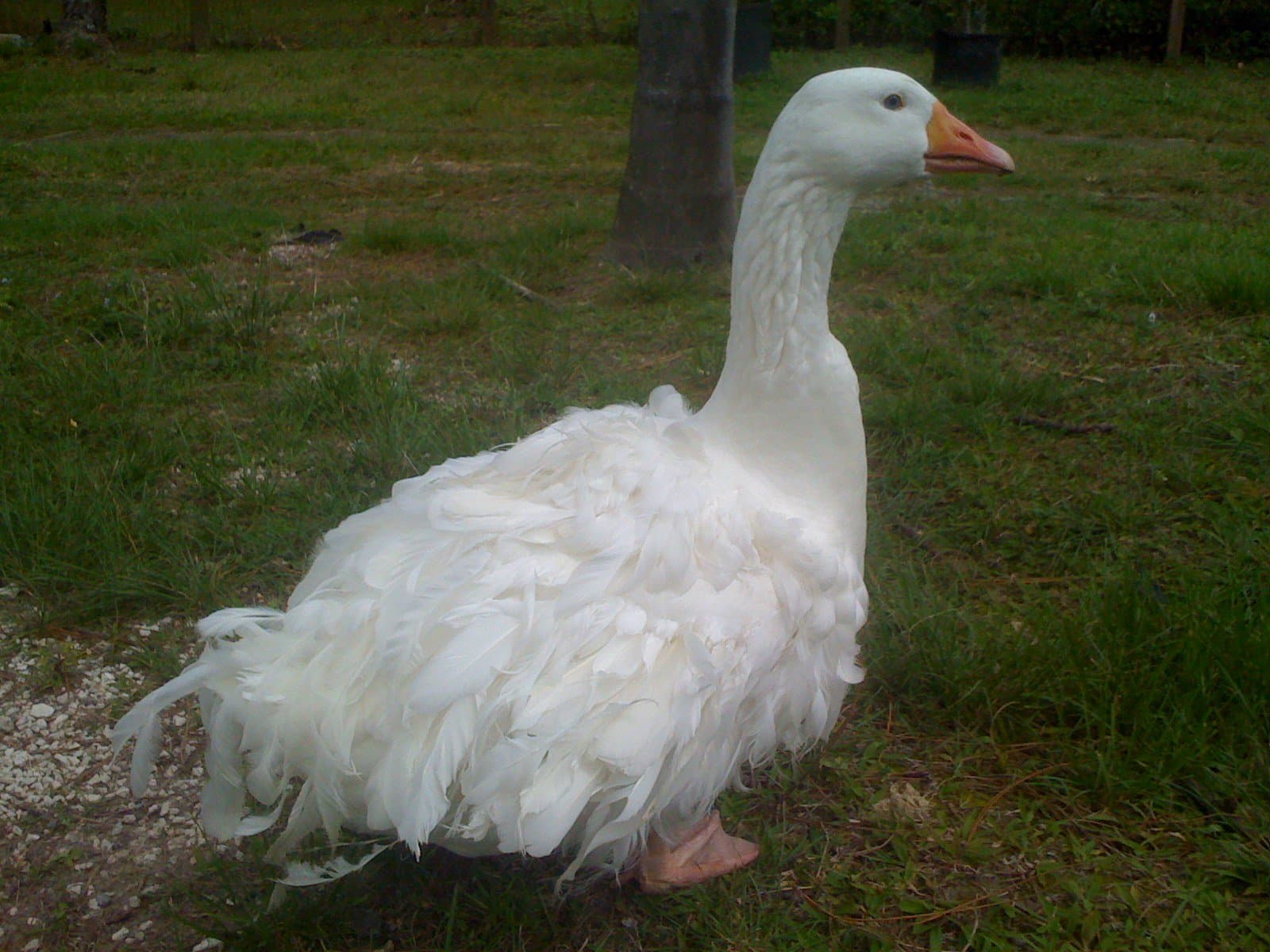
The Sebastopol is a medium goose with long, curled feathers. It is mainly kept for showing or as an unusual pet.
The Sebastopol is a pure-bred goose breed in the PCGB Light class. Its origin is given as Black Sea / Danube region. It appears on the RBST Watchlist as a priority breed, so keepers of pure stock help conserve it.
It is kept in light form. Recognised colours: Buff, White, (Curled feather, smooth breasted varieties). Typical adult weights: gander about 5.7–7 kg and goose about 4.5–6 kg.
Expect roughly 30–50 eggs a year, with white shells. It is mainly kept for exhibition or as an ornamental bird.
Compiled from poultryclub.org, rbst.org.uk, domestic-waterfowl.co.uk, poultrykeeper.com, waterfowl.org.uk, en.wikipedia.org. See sources
Photos
From keepers' flocks
No keeper photos yet.
Keep this breed? Add your birds on Flockstock and share a photo from the bird's page. Go to my flock
Identity
- Species
- Goose
- Type
- Pure breed
- PCGB class
- Light
- Origin
- Black Sea / Danube region
- Kept for
- Exhibition or ornamental
History
It probably reached the UK around 1859 and was shown in 1860. Whether it came from Sebastopol is unknown. In 1929, Edward Brown traced curl-feathered white geese to the lands around the Black Sea and the Danube, and it was also called the Danubian. America standardised it in 1938 and Britain in 1982.
Appearance
Two forms exist: the frizzle, curled all over except the head and upper neck, and the smooth-breasted. The UK has White and Buff, and America White only. Ganders weigh about 5.4–6.4 kg and geese 4.5–5.4 kg. It has orange legs and bright blue eyes.
Recognised colours
Buff, White, (Curled feather, smooth breasted varieties)
Size and weight
- Forms
- Light
- Gander
- 5.7–7 kg
- Goose
- 4.5–6 kg
Eggs
- Eggs a year
- 30–50
- Egg colour
- White
- Notes
- No egg figure was found in the sources.
Temperament
- Keeping notes
- Its curled feathers make flight almost impossible and keep out water less well, so it needs shelter and clean, dry conditions.
Hardiness
Needs shelter (feathers less waterproof)
Broodiness
Not recorded yet.
Flying
Almost unable to fly
Suitability
- Good to know
- White females can show light grey feathers in their first year.
Conservation status (RBST)
A priority breed on the Rare Breeds Survival Trust Watchlist.
Breed club
- The Goose Club, umbrella · Website
Sources
This page is compiled from:
Review
Nothing is flagged on this page at the moment. Breeds and strains vary, so check with a breeder or club too.
Suggest a change
Spotted something wrong or missing? Tell us what it should say, and we'll review it.