Japanese (Coturnix) quail
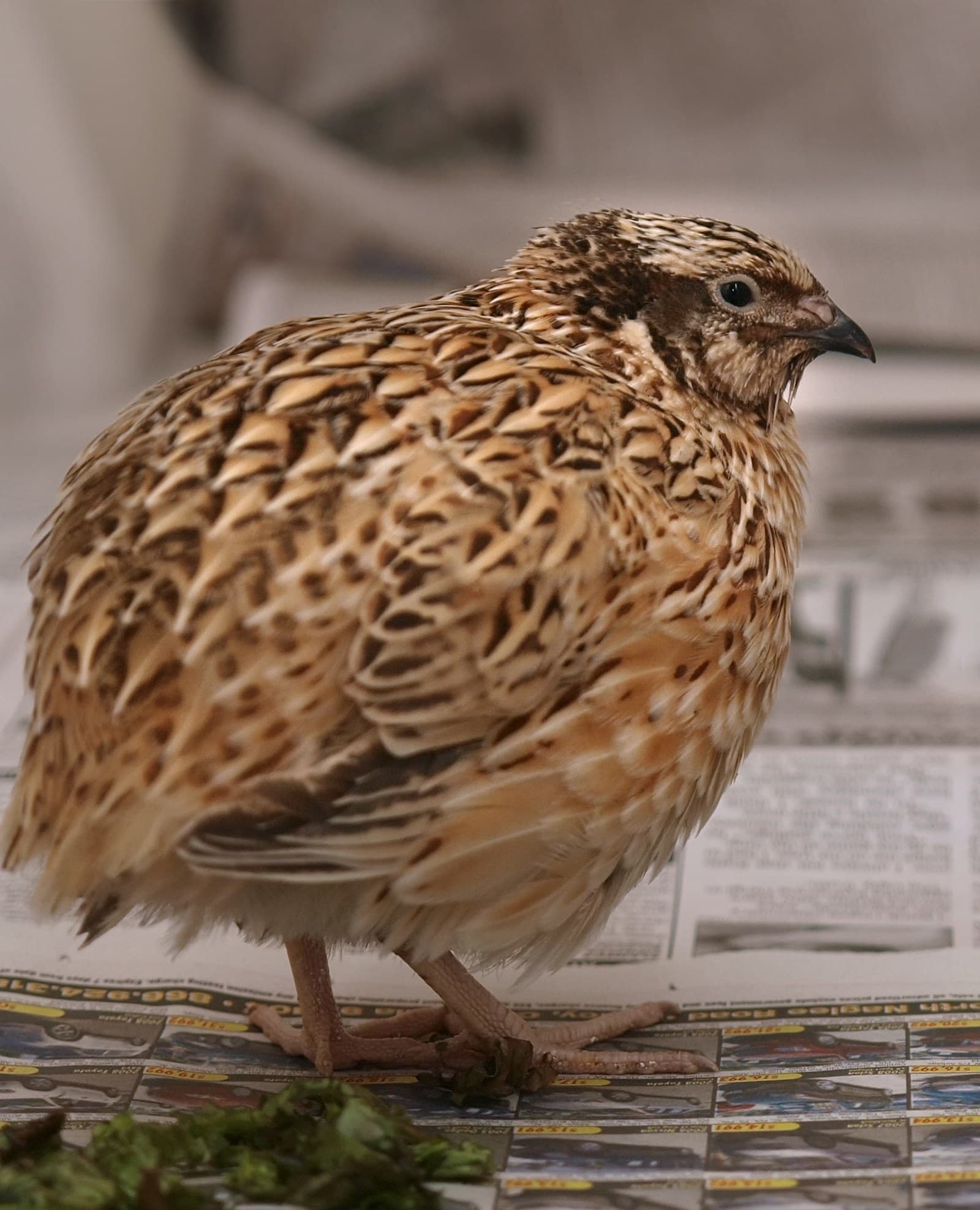
The Japanese (Coturnix) quail is a small East Asian quail and the species most kept for eggs and meat. It is also widely used in research.
Some details are still being checked. Anything marked unconfirmed or reported may change. Suggest a change
The Japanese (Coturnix) quail is a pure-bred quail breed. Its origin is thought to be East Asia (domesticated in Japan), which we are still checking.
It is kept in standard form. Recognised colours: Wild type (Pharaoh), Italian (Golden/Fawn), English White, Texas A&M (white, meat), Tuxedo, Manchurian Golden, Tibetan/Range (dark).
Expect roughly 200–300 eggs a year, with speckled (cream with brown/black) shells.
Compiled from en.wikipedia.org. See sources
Photos
From keepers' flocks
No keeper photos yet.
Keep this breed? Add your birds on Flockstock and share a photo from the bird's page. Go to my flock
Identity
- Species
- Quail
- Type
- Pure breed
- Origin
- East Asia (domesticated in Japan) (unconfirmed)
History
Domestic flocks are recorded from 12th-century Japan, possibly the 11th. They were first kept as songbirds. Temminck and Schlegel described it in 1848 as a subspecies of the common quail; it is now treated as a separate species.
Appearance
Wild birds weigh 90–100 g and domestic birds 100–120 g; meat strains can reach 300 g. Many colour strains exist, including Pharaoh, Italian, Manchurian, Tibetan and Rosetta, plus mutations such as celadon, which lays blue-tinted eggs. Most strains can be sexed by plumage, and males are smaller.
Recognised colours
Wild type (Pharaoh), Italian (Golden/Fawn), English White, Texas A&M (white, meat), Tuxedo, Manchurian Golden, Tibetan/Range (dark)
Size and weight
- Forms
- Standard
Eggs
- Eggs a year
- 200–300
- Egg colour
- Speckled (cream with brown/black)
- Notes
- Eggs are usually laid in the hours before dusk. Incubation averages 16.5 days.
Temperament
- Keeping notes
- Females do most of the incubating and eventually drive the male away.
Hardiness
Not recorded yet.
Broodiness
Not recorded yet.
Flying
Not recorded yet.
Suitability
Not recorded yet.
Conservation status (RBST)
Not on the Rare Breeds Survival Trust's priority list.
Breed club
Not recorded yet.
Sources
This page is compiled from:
Review
Some details are still being checked. In particular: origin.
Suggest a change
Spotted something wrong or missing? Tell us what it should say, and we'll review it.