Dorking chicken
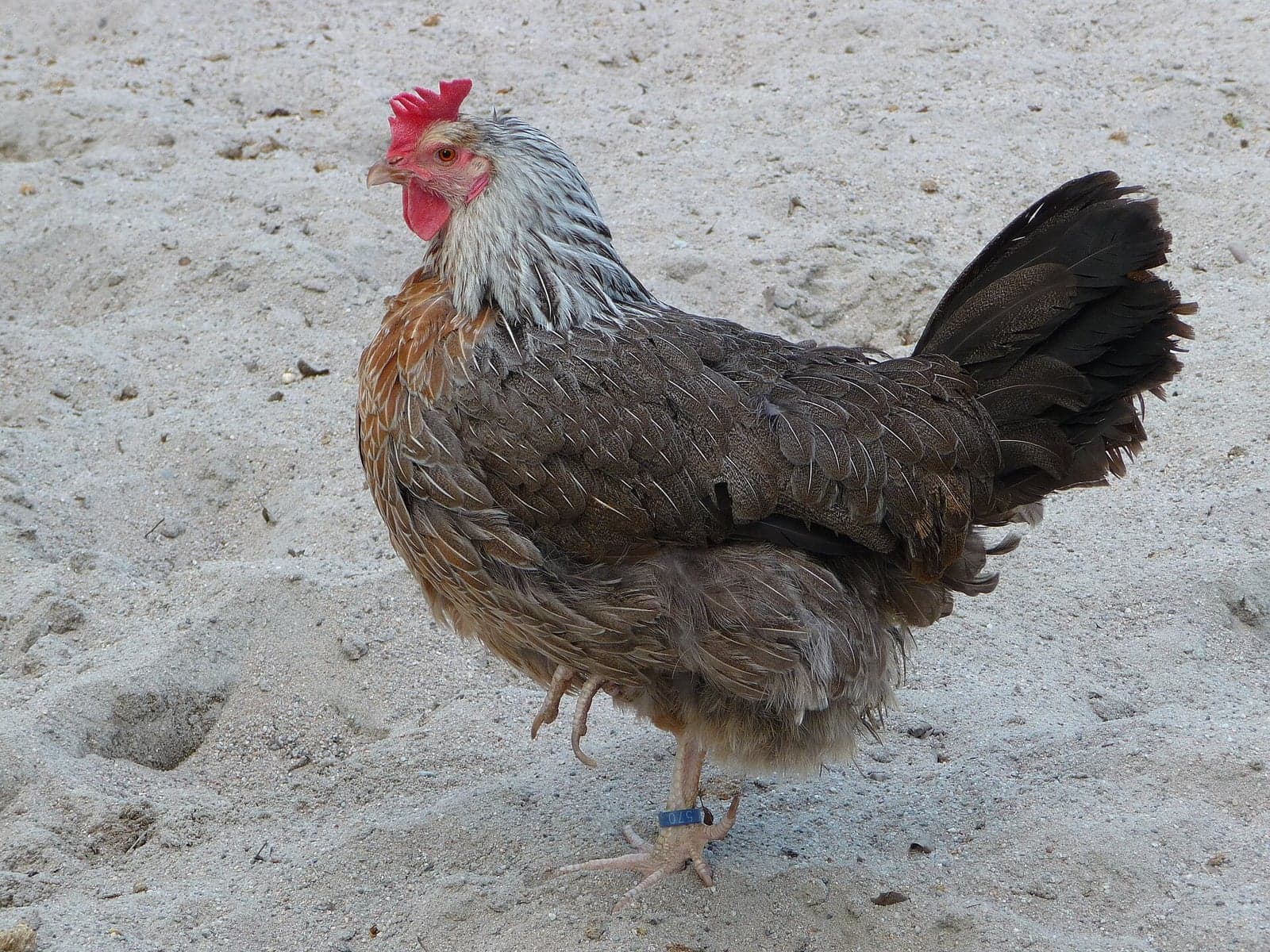
The Dorking is one of Britain's oldest chicken breeds: a five-toed table bird named after the Surrey market town.
The Dorking is a pure-bred chicken breed in the PCGB Soft Feather Heavy class. Its origin is given as Dorking, Surrey. It appears on the RBST Watchlist as a priority breed, so keepers of pure stock help conserve it.
It is kept in large and bantam forms. Recognised colours: Cuckoo, Dark Red, Silver Grey, White. Typical adult weights: cock about 4.55–6.35 kg, hen about 3.6–4.55 kg, bantam cock about 1130–1360 g and bantam hen about 910–1130 g.
Expect roughly 120–170 eggs a year, with white/tinted shells. It is mainly kept for the table.
Compiled from poultryclub.org, rbst.org.uk, poultrykeeper.com, en.wikipedia.org. See sources
Photos
From keepers' flocks
No keeper photos yet.
Keep this breed? Add your birds on Flockstock and share a photo from the bird's page. Go to my flock
Identity
- Species
- Chicken
- Type
- Pure breed
- PCGB class
- Soft Feather Heavy
- Origin
- Dorking, Surrey
- Kept for
- Table
History
A link to five-toed hens in Roman times is often suggested; Columella praised five-toed hens as breeders. Wikipedia notes that whether the Romans brought such birds is unknown. Dorking supplied London markets and was the capital's main meat breed until the Sussex displaced it in the early 1900s. It was shown at the first poultry show (London Zoo, 1845) and included in the 1865 standard. Plumage patterns settled after the 1850s in Surrey, Kent and Sussex.
Appearance
Five toes; patterns include Cuckoo among others.
Recognised colours
Cuckoo, Dark Red, Silver Grey, White
Size and weight
- Forms
- Large, Bantam
- Cock
- 4.55–6.35 kg
- Hen
- 3.6–4.55 kg
- Bantam cock
- 1130–1360 g
- Bantam hen
- 910–1130 g
Eggs
- Eggs a year
- 120–170
- Egg colour
- White/tinted
Temperament
- In short
- Calm, docile
- Keeping notes
- Calm and docile, a good forager, and scratches less than most breeds.
Hardiness
Not recorded yet.
Broodiness
Not recorded yet.
Flying
Not recorded yet.
Suitability
Not recorded yet.
Conservation status (RBST)
A priority breed on the Rare Breeds Survival Trust Watchlist.
Breed club
- The Dorking Club, breed-specific · Website
Sources
This page is compiled from:
Review
Nothing is flagged on this page at the moment. Breeds and strains vary, so check with a breeder or club too.
Suggest a change
Spotted something wrong or missing? Tell us what it should say, and we'll review it.