Black East Indian duck
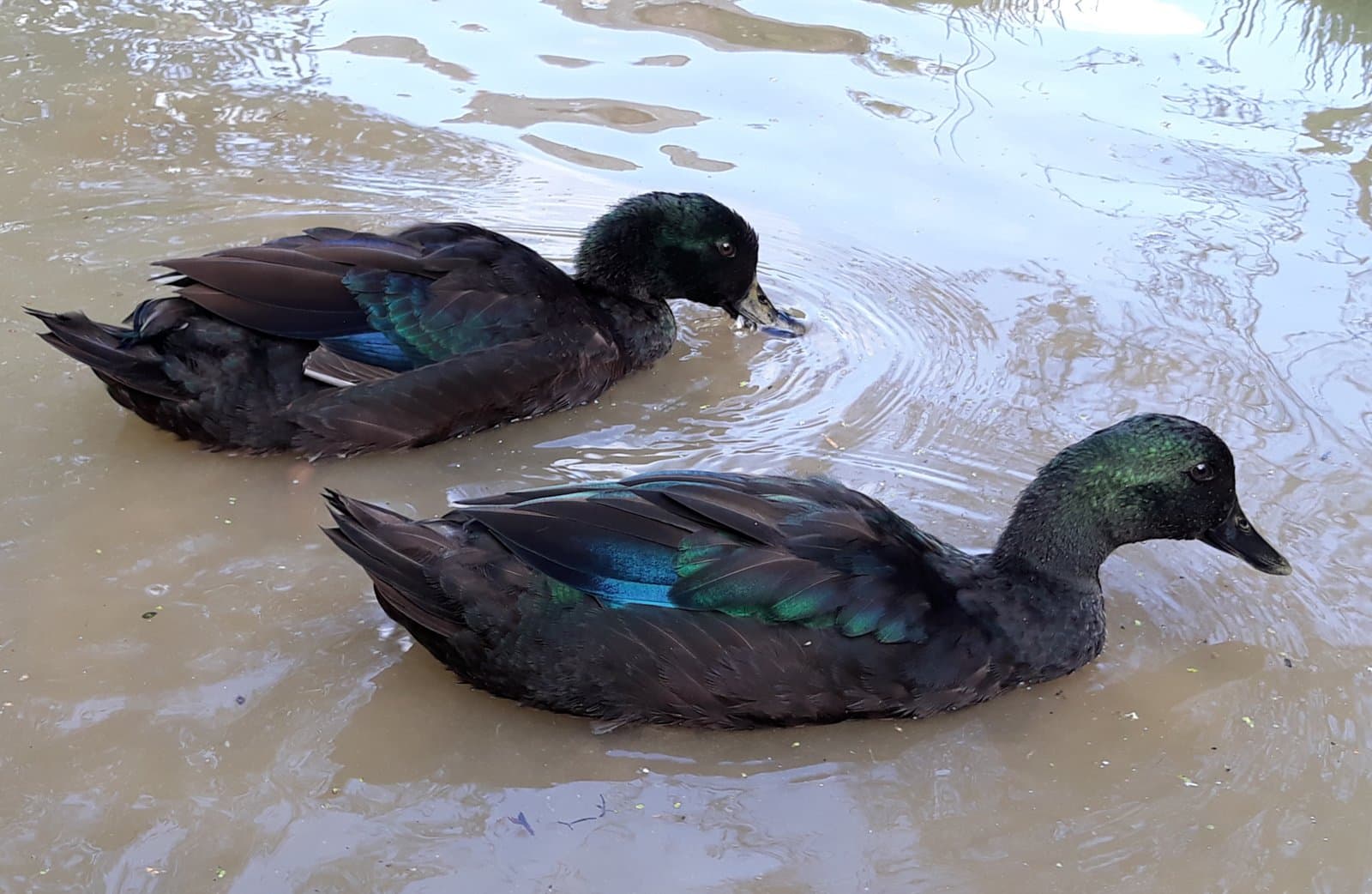
The Black East Indian is the oldest of the bantam duck breeds. It is a small ornamental duck kept for its glossy black plumage, which shows a strong beetle-green sheen in good light. It is on the RBST watchlist, as are all native duck breeds.
Some details are still being checked. Anything marked unconfirmed or reported may change. Suggest a change
The Black East Indian is a pure-bred duck breed in the PCGB Bantam class. Its origin is given as Unknown; often credited to the USA. It appears on the RBST Watchlist as a priority breed, so keepers of pure stock help conserve it.
It is kept in bantam form. Recognised colours: Black (green sheen). Typical adult weights: drake about 900 g and duck about 700–800 g.
Expect roughly 40–100 eggs a year, with grey/black to white shells. It is mainly kept for exhibition or as an ornamental bird.
Compiled from poultryclub.org, rbst.org.uk, domestic-waterfowl.co.uk, poultrykeeper.com, waterfowl.org.uk, en.wikipedia.org. See sources
Photos
From keepers' flocks
No keeper photos yet.
Keep this breed? Add your birds on Flockstock and share a photo from the bird's page. Go to my flock
Identity
- Species
- Duck
- Type
- Pure breed
- PCGB class
- Bantam
- Origin
- Unknown; often credited to the USA
- Kept for
- Exhibition or ornamental
History
The name has nothing to do with the East Indies and was probably a selling point. Over time the birds were also sold under names such as 'Buenos Airean' and 'Labrador'. They were in the London Zoological Society's collection by 1831 and at Knowsley Hall by about 1850. They appeared in Tegetmeier's first British standard in 1865, and in the first American Standard of Perfection in 1874 as the 'Black Indie'. Both BWA and Wikipedia say the breed is often credited to the USA, but its exact origin is unknown.
Appearance
A bantam weighing under 1 kg, with black plumage and a black bill. The green lustre comes from feather structure rather than pigment, and on top show birds it reaches under the wings. Brown pencilling on the throat or under the wing suggests impure breeding. Ducks often develop white patches as they age. Only black is standardised.
Recognised colours
Black (green sheen)
Size and weight
- Forms
- Bantam
- Drake
- 900 g
- Duck
- 700–800 g
Eggs
- Eggs a year
- 40–100
- Egg colour
- Grey/black to white
- Notes
- Poultrykeeper gives roughly 40–100 white eggs a year. Early-season eggs can carry a dark grey wash.
Temperament
- Keeping notes
- A garden and exhibition duck. Because it is light, it can fly, so wing clipping or a covered run may be needed (unconfirmed).
Hardiness
Not recorded yet.
Broodiness
Not recorded yet.
Flying
Light enough to fly (unconfirmed)
Suitability
- Good to know
- It shares its extended-black colour gene with the larger Cayuga. Some writers have claimed the black comes from the American Black Duck, but Wikipedia calls this unsubstantiated.
Conservation status (RBST)
A priority breed on the Rare Breeds Survival Trust Watchlist, listed as Black East Indian Duck.
Breed club
Sources
This page is compiled from:
Review
Some details are still being checked. In particular: flying.
Suggest a change
Spotted something wrong or missing? Tell us what it should say, and we'll review it.