Indian Runner duck
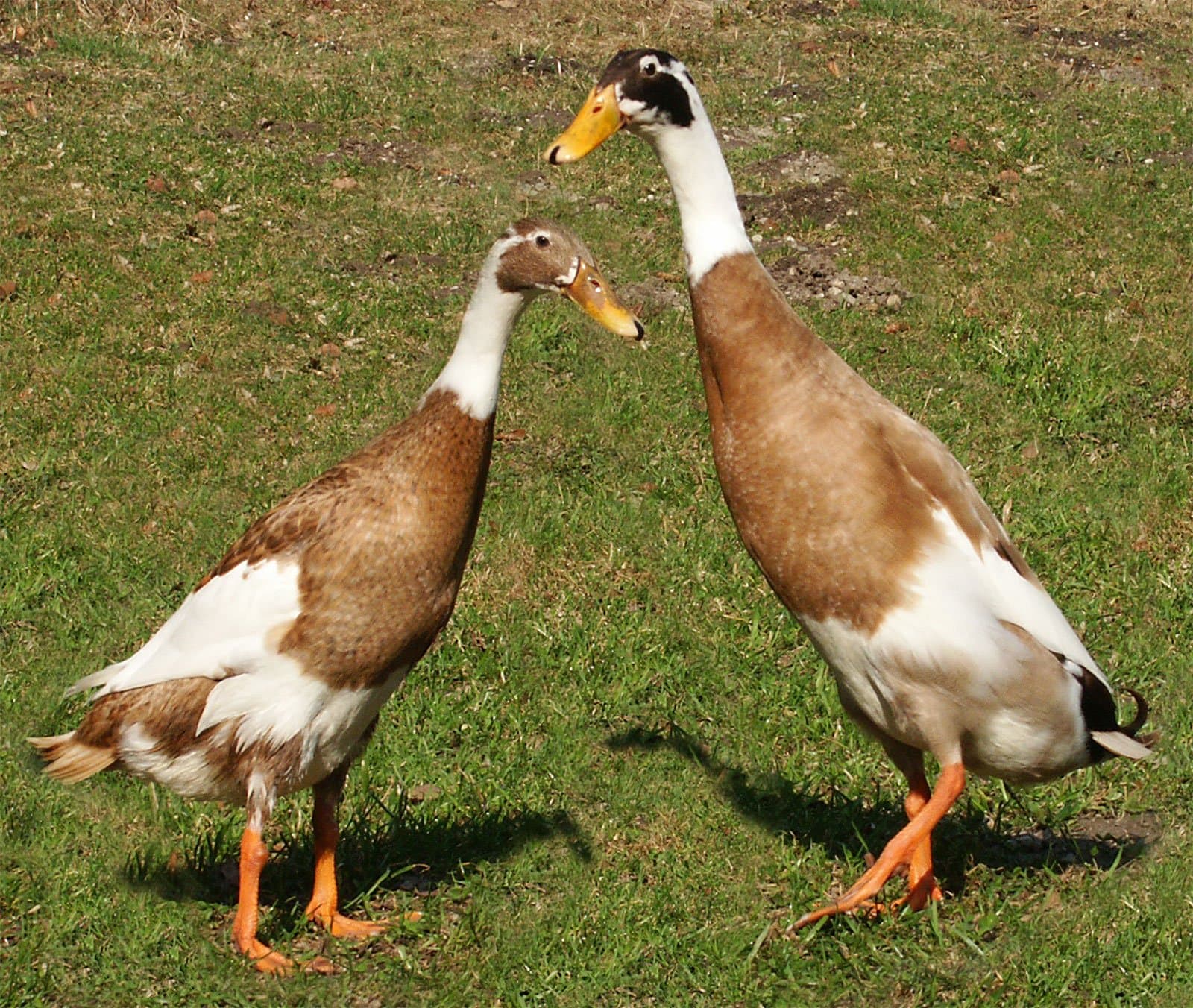
Indian Runners stand upright like bottles and run rather than waddle. They are bred for eggs and are prized for clearing slugs, for example in vineyards.
Some details are still being checked. Anything marked unconfirmed or reported may change. Suggest a change
The Indian Runner is a pure-bred duck breed in the PCGB Light class. Its origin is given as East Indies (Malaya, Java, Lombok).
It is kept in light form. Recognised colours: Apricot Trout (Saxony), Black, Blue, Chocolate, Fawn, White, Mallard, Silver, Trout. Typical adult weights: drake about 1.6–2.3 kg and duck about 1.4–2 kg.
Expect roughly 100–200 eggs a year, with white/greenish shells. It is mainly kept for eggs.
Compiled from poultryclub.org, domestic-waterfowl.co.uk, poultrykeeper.com, waterfowl.org.uk, en.wikipedia.org. See sources
Photos
From keepers' flocks
No keeper photos yet.
Keep this breed? Add your birds on Flockstock and share a photo from the bird's page. Go to my flock
Identity
- Species
- Duck
- Type
- Pure breed
- PCGB class
- Light
- Origin
- East Indies (Malaya, Java, Lombok)
- Kept for
- Eggs
History
They came from the East Indies (Malaya, Java and Lombok), not India. Walton pinned down the origin in 1909. They reached Britain around 1835 and were at first called Penguin Ducks. They became established in Cumbria and Dumfries. Fawn & White was standardised in 1901, and the UK now has 14 colours. The Runner contributed to nearly every light duck breed, including the Khaki Campbell, Welsh Harlequin and Abacot Ranger.
Appearance
Very upright, standing about 50–76 cm and weighing about 1.4–2.3 kg. The pelvis sits nearer the tail than in other ducks. Colours include Fawn & White, White, Fawn, Black, Chocolate, Mallard, Trout and Cumberland Blue, plus Apricot Dusky, Blue Dusky, Apricot Trout, Blue Trout and Silver (added 2008).
Recognised colours
Apricot Trout (Saxony), Black, Blue, Chocolate, Fawn, White, Mallard, Silver, Trout
Size and weight
- Forms
- Light
- Drake
- 1.6–2.3 kg
- Duck
- 1.4–2 kg
Eggs
- Eggs a year
- 100–200
- Egg colour
- White/greenish
- Notes
- Lays well. Wikipedia gives a measured figure of over 173 eggs a year, warning that bigger claims are unproven. About 200 is more common in good strains, and exhibition strains lay fewer.
Temperament
- In short
- Active forager
- Keeping notes
- Busy foragers that prefer to forage rather than swim. In their homeland they were herded out each morning and brought back at night. They do not fly.
Hardiness
Hardy (unconfirmed)
Broodiness
Not recorded yet.
Flying
Does not fly
Suitability
- Good to know
- The BWA now gives them a class of their own because they are so popular. The crested version is the Bali.
Conservation status (RBST)
Not on the Rare Breeds Survival Trust's priority list.
Breed club
- The Indian Runner Duck Club, breed-specific · Website
Sources
This page is compiled from:
Review
Some details are still being checked. In particular: hardiness.
Suggest a change
Spotted something wrong or missing? Tell us what it should say, and we'll review it.