Campbell duck
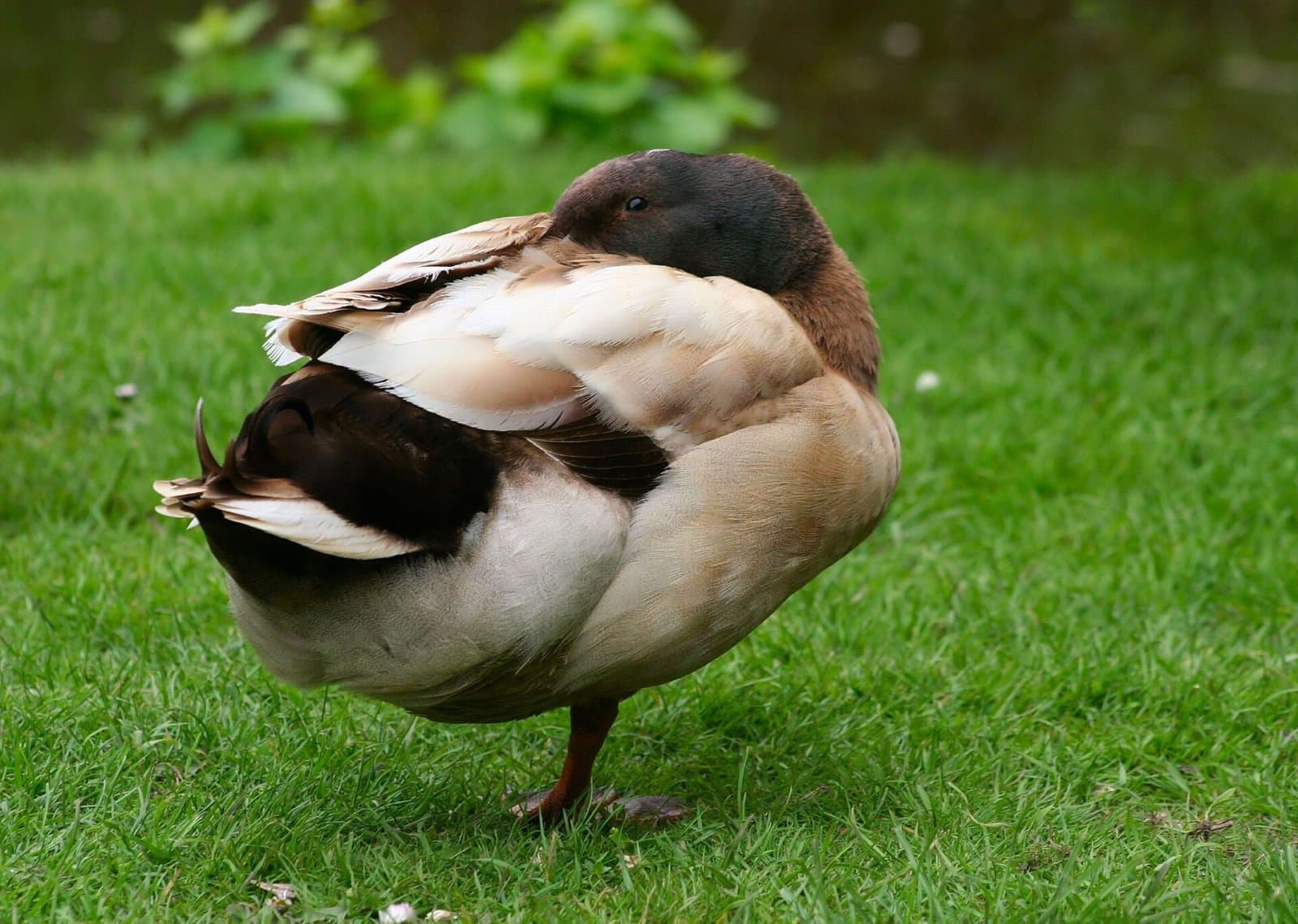
The Campbell, best known as the Khaki Campbell, is the most famous British laying duck. It was designed in the early 1900s for eggs and table quality. It is on the RBST watchlist.
The Campbell is a pure-bred duck breed in the PCGB Light class. Its origin is given as Uley, Gloucestershire. It appears on the RBST Watchlist as a priority breed, so keepers of pure stock help conserve it.
It is kept in light form. Recognised colours: Khaki, Dark, White. Typical adult weights: drake about 2.3–2.5 kg and duck about 2–2.3 kg.
Expect 250–300+ eggs a year, with white shells. It is mainly kept for eggs and for the table.
Compiled from poultryclub.org, rbst.org.uk, domestic-waterfowl.co.uk, poultrykeeper.com, waterfowl.org.uk, en.wikipedia.org. See sources
Photos
From keepers' flocks
No keeper photos yet.
Keep this breed? Add your birds on Flockstock and share a photo from the bird's page. Go to my flock
Identity
- Species
- Duck
- Type
- Pure breed
- PCGB class
- Light
- Origin
- Uley, Gloucestershire
- Kept for
- Eggs, Table
History
Adele Campbell of Uley, Gloucestershire, started from an exceptional Indian Runner layer. She crossed it with Rouen and a little wild Mallard. The first 'Campbell' appeared in 1898, and the Khaki, named after army uniforms, in 1901. The Khaki was standardised in 1926. Captain F.S. Pardoe developed the White in 1924, and the White and Dark were added in 1954.
Appearance
Three colours are recognised: Khaki, Dark and White. A light, active duck.
Recognised colours
Khaki, Dark, White
Size and weight
- Forms
- Light
- Drake
- 2.3–2.5 kg
- Duck
- 2–2.3 kg
Eggs
- Eggs a year
- 250–300+
- Egg colour
- White
- Notes
- Extremely prolific. It became the top egg-laying duck. BWA warns that many generic brown ducks are mis-sold as Khaki Campbells.
Temperament
- In short
- Active, agile
- Keeping notes
- Agile, fertile and an energetic forager.
Hardiness
Not recorded yet.
Broodiness
Not recorded yet.
Flying
Not recorded yet.
Suitability
- Good to know
- It gave rise to the Welsh Harlequin, the Abacot Ranger and the Whaylesbury hybrid.
Conservation status (RBST)
A priority breed on the Rare Breeds Survival Trust Watchlist.
Breed club
Sources
This page is compiled from:
Review
Nothing is flagged on this page at the moment. Breeds and strains vary, so check with a breeder or club too.
Suggest a change
Spotted something wrong or missing? Tell us what it should say, and we'll review it.