Hook Bill duck
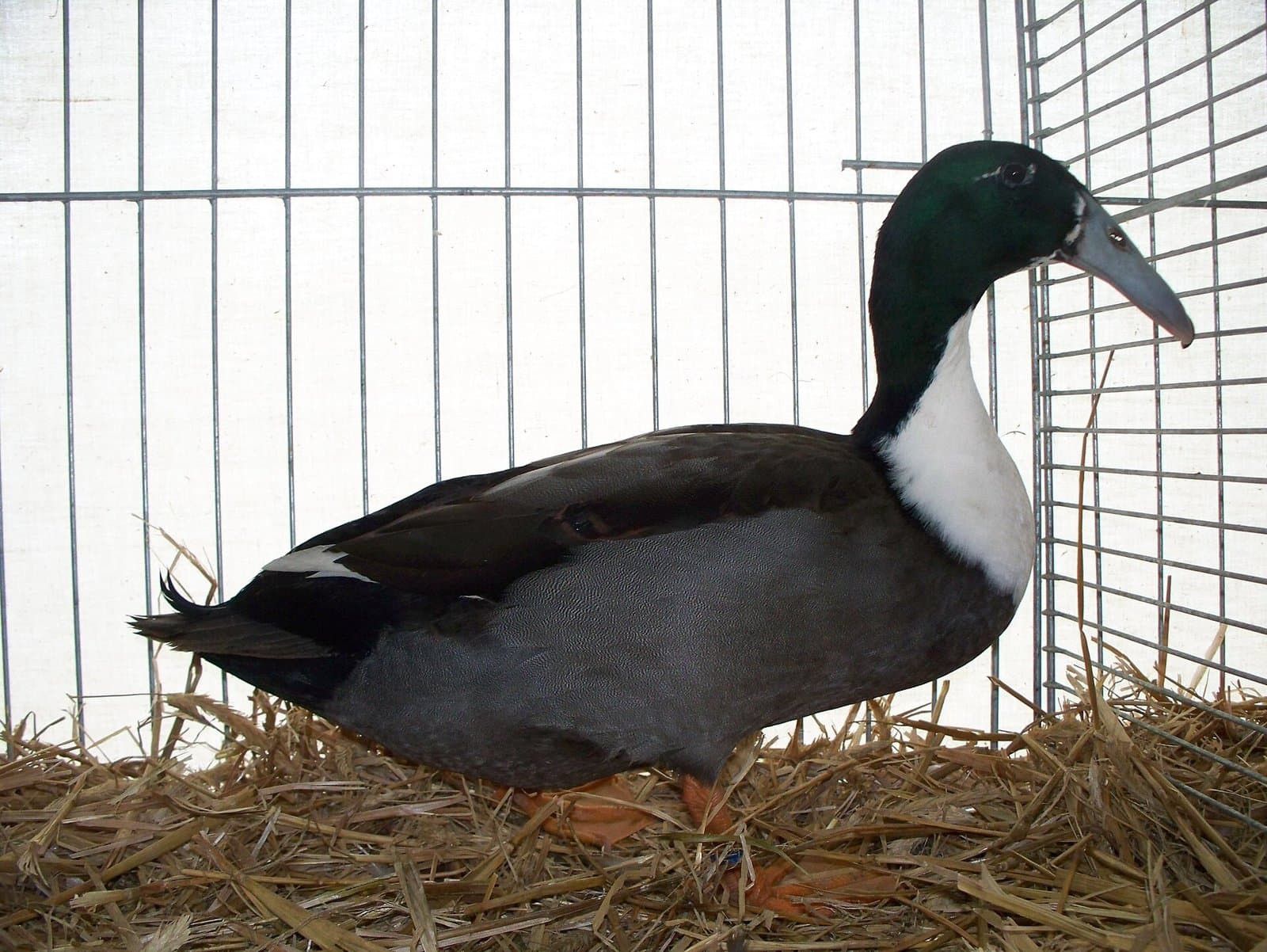
The Hook Bill is a Dutch duck with a bill that curves sharply downwards, a shape found in no other duck. It is one of the oldest domestic duck breeds and is on the RBST watchlist.
Some details are still being checked. Anything marked unconfirmed or reported may change. Suggest a change
The Hook Bill is a pure-bred duck breed in the PCGB Light class. Its origin is given as North Holland, Netherlands. It appears on the RBST Watchlist as a priority breed, so keepers of pure stock help conserve it.
It is kept in light form. Recognised colours: Dusky Mallard, White-bibbed Dusky Mallard, White. Typical adult weights: drake about 2–2.25 kg and duck about 1.6–2 kg.
Expect roughly 100–200 eggs a year, with white/blue-green shells. It is mainly kept for eggs, for the table and for exhibition or as an ornamental bird.
Compiled from poultryclub.org, rbst.org.uk, domestic-waterfowl.co.uk, poultrykeeper.com, waterfowl.org.uk, en.wikipedia.org. See sources
Photos
From keepers' flocks
No keeper photos yet.
Keep this breed? Add your birds on Flockstock and share a photo from the bird's page. Go to my flock
Identity
- Species
- Duck
- Type
- Pure breed
- PCGB class
- Light
- Origin
- North Holland, Netherlands
- Kept for
- Eggs, Table, Exhibition or ornamental
History
It is associated with North Holland. Francis Willughby illustrated a 'Hook-bill'd Duck' in 1676, and Dutch painters such as Hondecoeter showed it in the 1600s. Darwin kept it. The origin is unknown, and Wikipedia calls theories of an Asian or Runner link unsupported. Poultrykeeper says birds were once let out along Dutch canals to feed and came home at night to lay. Britain admitted it in 1997.
Appearance
Medium-light, with an elongated, down-curved bill. Varieties include dusky Mallard, white-bibbed dusky and white.
Recognised colours
Dusky Mallard, White-bibbed Dusky Mallard, White
Size and weight
- Forms
- Light
- Drake
- 2–2.25 kg
- Duck
- 1.6–2 kg
Eggs
- Eggs a year
- 100–200
- Egg colour
- White/blue-green
- Notes
- Poultrykeeper gives about 100–200 blue-tinted eggs a year.
Temperament
- Keeping notes
- An active forager that is said to fly fairly well (unconfirmed).
Hardiness
Not recorded yet.
Broodiness
Not recorded yet.
Flying
Said to fly fairly well (unconfirmed)
Suitability
- Good to know
- One story says the white bib helped hunters tell it from wild Mallards. Poultrykeeper presents this only as a story.
Conservation status (RBST)
A priority breed on the Rare Breeds Survival Trust Watchlist, listed as Hook-billed.
Breed club
Sources
This page is compiled from:
Review
Some details are still being checked. In particular: flying.
Suggest a change
Spotted something wrong or missing? Tell us what it should say, and we'll review it.